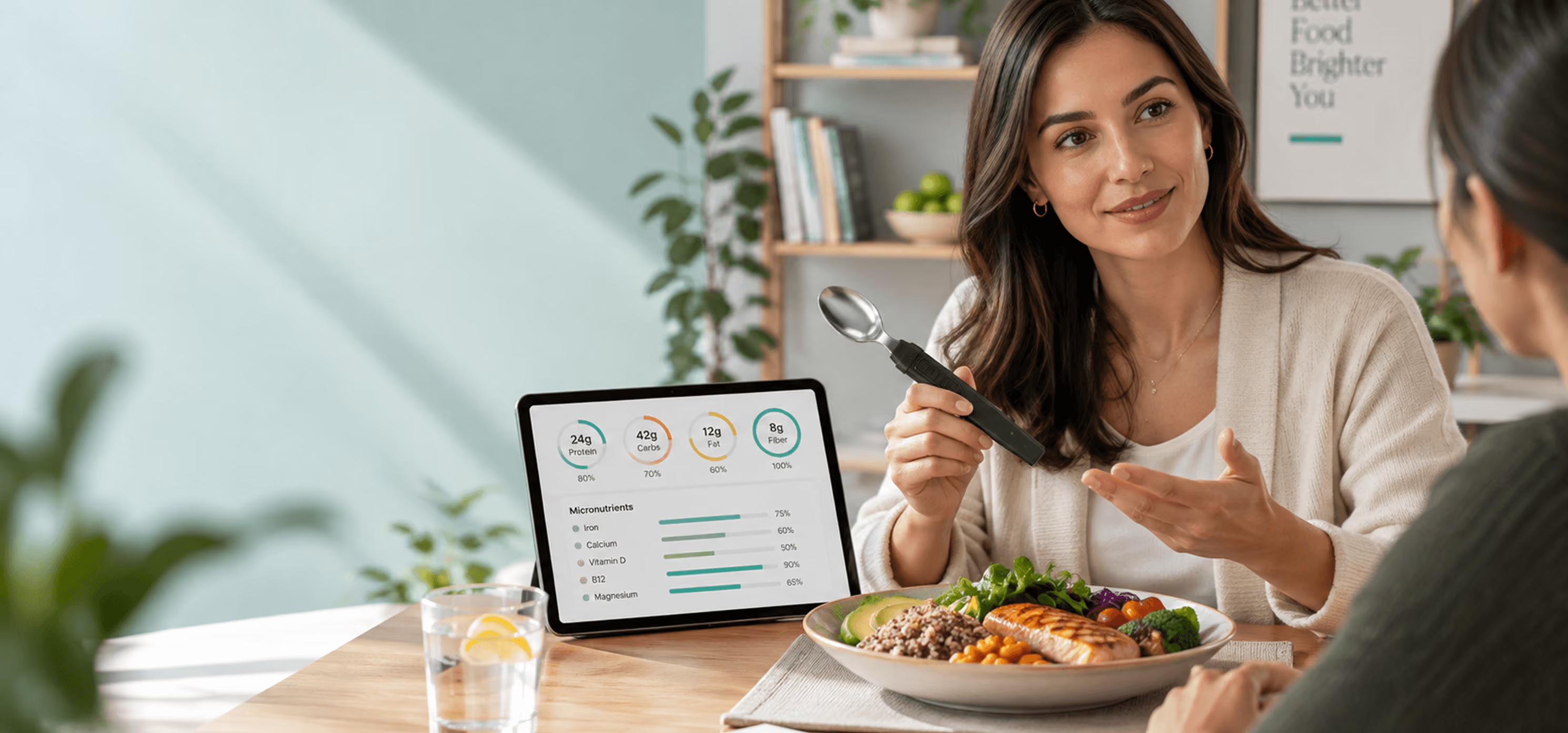

Macro and micronutrient tracking, down to the bite.
Most tracking apps stop at calories. BiteQ measures the macronutrients and micronutrients you actually eat and maps them against Dietary Reference Intakes.
Why isn't calorie counting enough?
Calorie counting became the default unit of nutrition tracking mostly because it's a single number, easy to target and easy to compare against a daily goal. But a calorie count says nothing about nutrient quality: two meals with an identical calorie total can differ enormously in protein, fiber, vitamins and minerals, and a tracking method that stops at calories has no way to show that difference.
Macronutrients, protein, carbohydrates and fat, are the next layer most tracking apps attempt, usually estimated the same way calories are: matched to a database entry and scaled by an assumed portion size. Micronutrients, vitamins and minerals, are rarer still in consumer tracking, largely because they're harder to estimate from a food match alone and rarely show up in a typical app's dashboard at all.
BiteQ measures macronutrients and micronutrients directly from the portion actually eaten, using the same load sensor and food-recognition camera that measure calories, and maps that intake against Dietary Reference Intakes (DRIs), the nutrient standards used to judge whether someone is getting enough of a given nutrient. That gives a fuller picture than a calorie total alone: not just how much was eaten, but what was in it.
This depth also matters for a reason that's easy to overlook: nutrient needs aren't static. They shift with age, activity level, pregnancy, and specific health conditions, which means a Dietary Reference Intake that made sense a year ago might not reflect what's actually needed now. Ongoing, automatic measurement is what makes it possible to notice that kind of shift instead of working from an assumption that's quietly gone out of date.
It's also worth noting where this measurement stops. BiteQ tracks intake, not absorption, and not what the body does with a nutrient after it's eaten. Two people with identical measured intake can still have different nutritional outcomes for reasons a utensil has no way to observe, which is exactly the kind of question that belongs with a doctor or registered dietitian rather than a tracking device.
How does BiteQ track macronutrients and micronutrients?
A number on its own doesn't tell you much about nutrient quality. Here's what BiteQ adds underneath it.

Beyond the calorie count
Sensors measure macronutrients and micronutrients in the food you actually eat, not only total calories.

See your Dietary Reference Intakes
Nutrient data is mapped against Dietary Reference Intakes (DRIs), surfacing micronutrient coverage that most tracking apps never show.

Per bite, not per serving
Because the load sensor measures each individual bite, resolution is finer than the per-serving estimates most food logs rely on.
Who is macro and micronutrient tracking for?
Nutrient depth matters most once a calorie target alone stops answering the actual question someone is asking. See the broader set of goals BiteQ is built for individuals to track.
01
Anyone whose nutrition goals go beyond a calorie target. Including athletes tracking protein intake, or anyone managing a nutrient-specific goal like iron, fiber, or a particular vitamin.
02
People eating a restricted or specialized diet. Who need visibility into whether specific nutrients are being adequately covered, not just whether calorie totals are on target.
03
Anyone curious whether a diet that feels balanced actually reflects Dietary Reference Intakes. Rather than just landing on a calorie number that says nothing about nutrient quality.
04
People working with a dietitian who has to build nutrient targets. That a typical calorie-counting app has no way to display.
How does a food database match compare to a measured bite?
Producing macro and micro figures
Food database match
BiteQ measured bite
Portion input
Food database matchUser-estimated serving size
BiteQ measured biteWeighed per bite
Common, unmixed foods
Food database matchReasonable approximation
BiteQ measured biteMeasured directly
Mixed or home-cooked dishes
Food database matchWeakest case; a generic entry may not reflect the ingredients
BiteQ measured biteMeasured from the meal as eaten
Extra effort for nutrient detail
Food database matchYes; more careful logging
BiteQ measured biteNone; the same sensor pass as calories
Basis of the figure
Food database matchThe closest available database item
BiteQ measured biteThe specific meal in front of you
Most food-tracking apps calculate macros and micros from a food database entry, scaled by an estimated serving size. That's a reasonable approximation for common, unmixed foods, but it breaks down for home-cooked meals, mixed dishes, and restaurant food, where the real nutrient content can vary significantly from a generic database match.
BiteQ's sensors measure the actual portion eaten rather than matching it to a generic database entry and assuming a standard serving. Because the same bite-level measurement that produces the calorie figure also produces the macro and micronutrient figures, the additional detail doesn't require a separate, more careful logging step, the way trying to get more nutrient detail out of a typical tracking app usually does.
The two approaches also diverge most on mixed or home-cooked dishes, where a generic database entry is least likely to reflect the actual ingredients and proportions used. BiteQ's sensors measure the meal as it's actually eaten rather than matching it to the closest available database item, which keeps the macro and micronutrient figures grounded in the specific meal rather than a generic stand-in for it.
How do you use micronutrient data day to day?
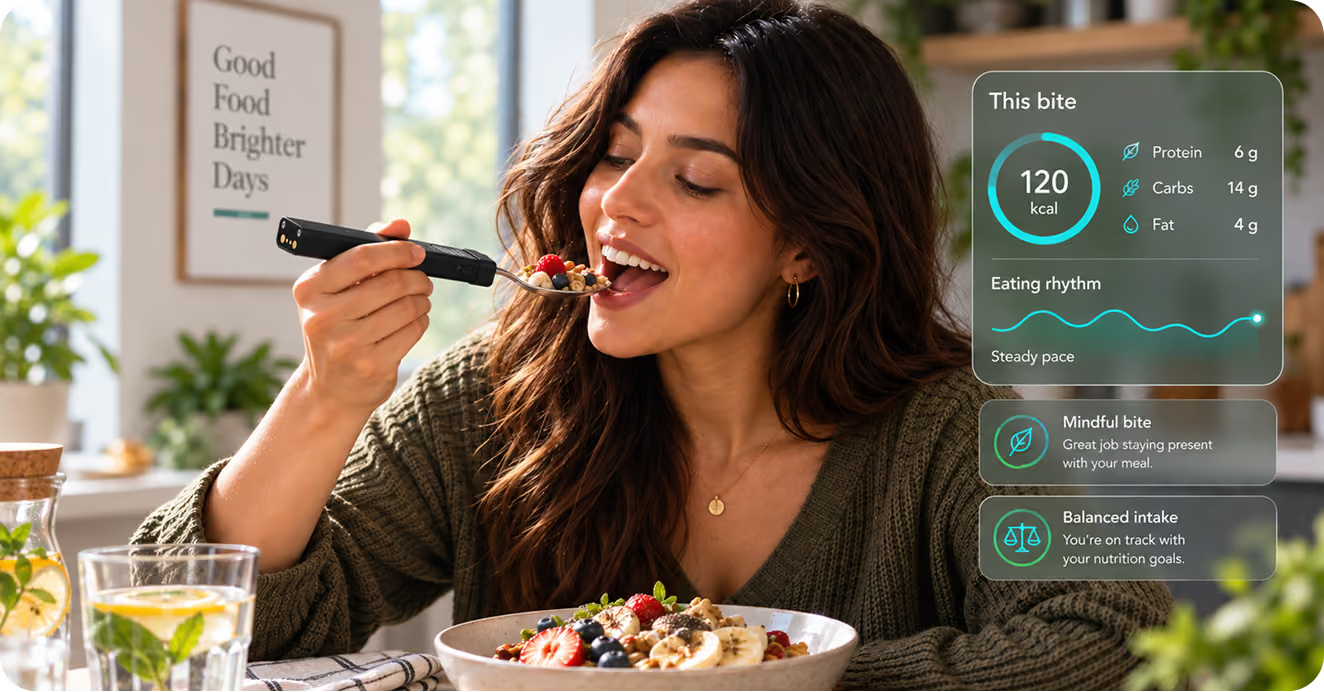
Day to day, tracking macros and micronutrients with BiteQ doesn't ask for anything beyond eating the meal. The additional nutrient detail comes from the same sensor pass that produces the calorie count, so there's no extra step for the deeper data specifically.
The practical value shows up when nutrient intake is reviewed over time rather than meal by meal. A single meal's micronutrient reading is a snapshot; a week or a month of readings compared against Dietary Reference Intakes starts to show whether a particular nutrient consistently runs low, which is the kind of pattern a calorie-only view would never surface at all.
This level of detail is meant to inform, not diagnose. A consistent gap against a DRI is worth a conversation with a doctor or registered dietitian, who can weigh it alongside bloodwork and the rest of a person's health picture in a way a measurement device isn't positioned to do on its own.
This is also where the DRI comparison becomes more useful the longer it runs. A single day's shortfall in a nutrient might just be an unusual day; the same shortfall showing up consistently across weeks is a different kind of signal, and one that's only visible because the underlying measurement didn't require extra effort to keep going.
Questions people usually ask
Frequently asked questions about macro and micronutrient tracking
What's the difference between macro and micronutrient tracking?
What are Dietary Reference Intakes (DRIs) and why do they matter?
Does BiteQ track vitamins and minerals, or just calories and macros?
How accurate is micronutrient measurement from a utensil?
Do Dietary Reference Intakes account for my age, sex, or activity level?
Can I set a target for a specific nutrient, like protein or iron?
Does micronutrient tracking require a different kind of meal than macro tracking?
Is this useful if I'm not trying to lose weight, just eat a more balanced diet?