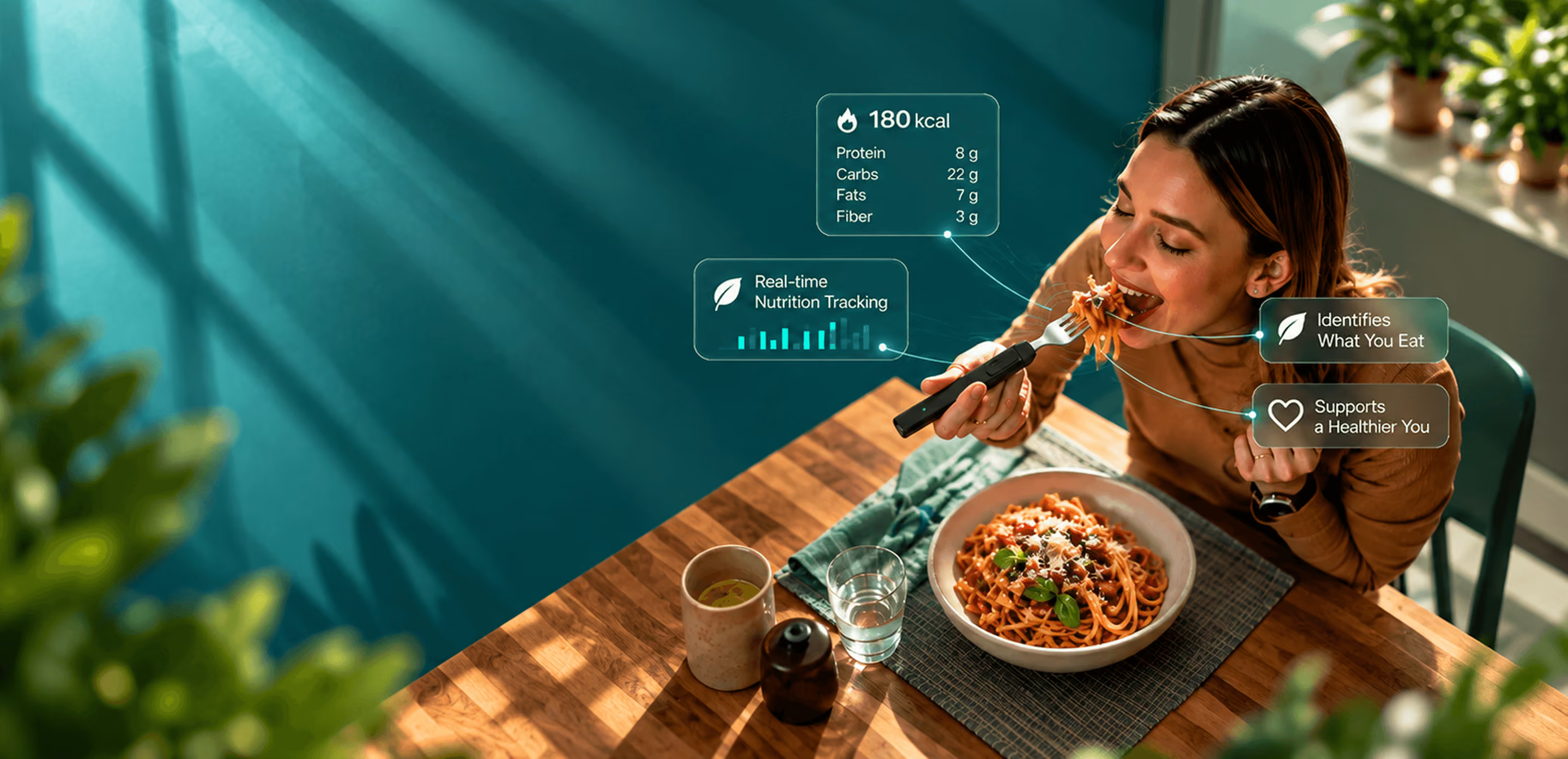
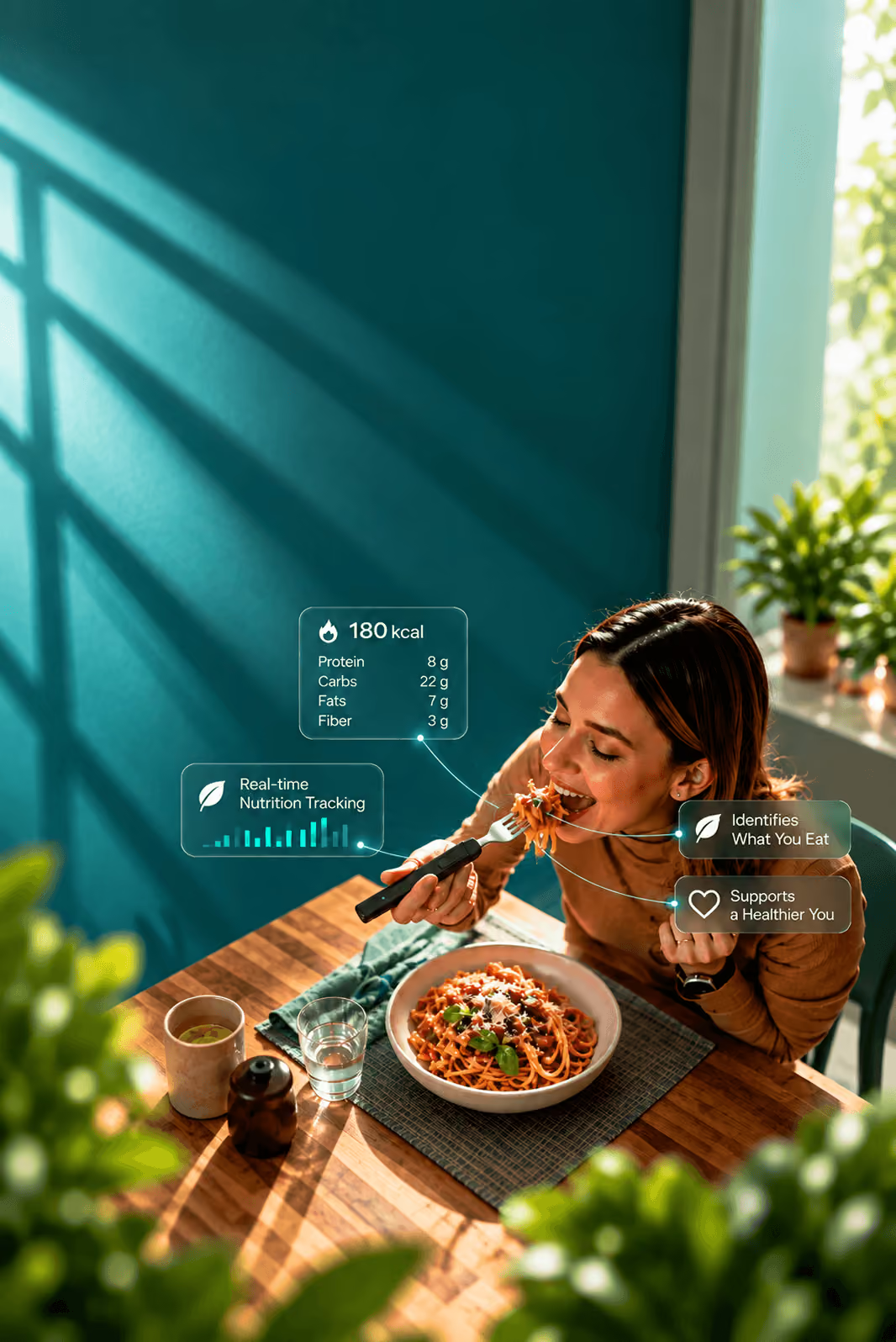
BiteQ is an AI data company. The utensil is how we collect the data.
Nutrition data has always been self-reported. BiteQ sells the smart utensil to generate what doesn't exist yet: large-scale, measured, bite-level nutrition data.
Why does BiteQ call itself an AI data company?
Every existing source of nutrition data, food-logging apps, dietary surveys, recall-based research, shares the same weakness: it depends on a person remembering and reporting what they ate. That weakness is well understood and rarely solved, because solving it has always required a sensor at the point of eating, not a better app.
BiteQ builds that sensor. The spoon and fork are the instrument; the load sensor, camera and motion sensor are how a bite becomes a measured data point instead of a self-reported one. Manufacturing and selling that instrument is necessary, but it is not the endpoint. It is what makes a fundamentally different category of data possible to collect at scale, whether the use case is weight management or clinical nutrition monitoring.
That distinction matters for how the business is built. A hardware company's value is mostly captured at the point of sale. A data company's value compounds after the sale, in the models trained on what the hardware collects, and in every new application that measured data makes possible.
How does BiteQ's nutrition dataset improve over time?
The hardware, the dataset and the AI are one compounding system, not three separate products.

Measured, not self-reported
Each utensil turns a meal into calories, macronutrients, micronutrients and eating-behavior data automatically, without depending on a person's memory or honesty about portion size.

A dataset with no substitute
Because the measurement happens at the bite, not the survey, the resulting dataset describes eating behavior at a resolution no food-logging app or dietary questionnaire can produce, at any scale.

AI that improves with scale
The on-demand nutrition advisor and behavior-pattern models are trained on this measured data, the same models surfaced on the Smart Utensil page. More units in the field means more measured meals, which means the models, and the products built on them, keep improving.

Plated and bar-coded food items the on-device camera is built to recognize

Required during the meal itself for the measurement to happen

Resolution of measurement, not per serving or per day
How does BiteQ handle personal eating data?
BiteQ does not sell personal eating data. Beta participants receive the full data handling terms, including retention periods, export and deletion options, before any device ships.
Every figure in the app comes from a sensor reading at the moment of eating, not an inference. That same discipline extends to how the data itself is handled: measured, attributable to a real event, and governed by terms participants see before they agree to anything.
This matters as much for the business as for any individual user. A dataset built on unclear consent or opaque handling is a liability, not an asset. BiteQ's position is that the data infrastructure has to be trustworthy by construction, not as an afterthought bolted on once the models are already trained, a standard we hold to whether the user is an individual on the for individuals plan or an operator evaluating BiteQ for business.
Questions people usually ask
Frequently asked questions about BiteQ's data thesis
Is BiteQ a hardware company or a data company?
What makes this data defensible or hard to replicate?
Does BiteQ sell or license personal data?
How does the AI improve as the company grows?