

Nutrition tracking that makes carbs and portions easier to see.
Managing diabetes often means estimating carbs and portions by eye, meal after meal. BiteQ measures the macronutrients in the food you actually eat, automatically.
Why is carbohydrate counting difficult?
Carbohydrate counting is one of the more demanding habits asked of people managing diabetes, precisely because it has to happen at every single meal, indefinitely, with real consequences riding on getting it roughly right. Estimating carbs by eye, from a plate that wasn't measured beforehand, is a skill that improves with practice but never fully removes the guesswork, especially with mixed dishes, sauces, and meals eaten outside the home.
The tools historically available to help are largely reference-based: carb-counting guides, portion-size charts, food databases that require looking up an item and estimating how closely a real plate matches a reference serving. All of them still depend on a person doing the estimating in the moment, which is the same friction point that makes any manual tracking method difficult to sustain meal after meal, year after year.
BiteQ approaches the same problem from the sensor side. A load sensor and a food-recognition camera measure the macronutrients, including carbohydrates, in the portion actually eaten, automatically, without a lookup table or a portion-size chart. This is not a substitute for glucose monitoring or clinical guidance, which remain essential, but it changes where the carb and portion numbers behind those conversations come from: a sensor reading, rather than a plate-side estimate.
This also means BiteQ's usefulness doesn't depend on any single meal being perfectly typical. A day with an unusual meal, a holiday, a restaurant visit with unfamiliar dishes, is measured with the same sensors as any other day, giving a care team visibility into exactly the kind of meals that are hardest to estimate accurately by eye in the first place.
What does BiteQ record for diabetes-related nutrition tracking?
BiteQ is not a medical device and does not diagnose, treat, or manage diabetes. It's a measurement tool meant to support the care a clinician already provides, including through programs like remote patient nutrition monitoring.
BiteQ is not a medical device and does not diagnose, treat, or manage diabetes or any other medical condition. It does not replace glucose monitoring or clinical guidance. Always follow the advice of your doctor or diabetes care team.

Portion-level macro data
A load sensor and food-recognition camera measure the macronutrients, including carbohydrates, in the amount of food actually eaten, not the amount served.

A record for appointments
Meal history, including macronutrient and behavior data, can be reviewed and exported from the app, giving a factual record to bring to a doctor or dietitian.

Consistent measurement, meal after meal
The same sensor measures every meal the same way, removing the day-to-day drift that comes from estimating portions by eye.
Who is diabetes-related nutrition tracking for?
This is meant to support, not replace, the routines and guidance already central to diabetes care, alongside the broader range of people BiteQ is built for individuals to help.
01
People managing type 1 or type 2 diabetes who currently estimate carbohydrates by eye. And want a more consistent starting point for that estimate, not a replacement for the estimating skill itself.
02
Anyone bringing dietary data to a diabetes care team, an endocrinologist, or a diabetes educator. Where consistent, real measurements are more useful than a best guess reconstructed from memory.
03
Caregivers managing meals for someone else with diabetes. Where the counting has to happen reliably regardless of who is doing the eating.
04
Anyone whose carb-counting confidence varies meal to meal. Particularly with mixed dishes, sauces, or food prepared outside their own kitchen.
How does a sensor reading compare to a reference-serving match?
Getting a carbohydrate figure
Carb-counting app or guide
BiteQ sensor reading
How the food is identified
Carb-counting app or guideYou match it to a database entry
BiteQ sensor readingThe camera identifies the food
How the portion is set
Carb-counting app or guideCompared by eye to a standard serving
BiteQ sensor readingWeighed per bite by the load sensor
Where accuracy is usually lost
Carb-counting app or guideThe estimation step
BiteQ sensor readingThere is no estimation step
Unfamiliar or mixed dishes
Carb-counting app or guideHardest case; no clean reference match
BiteQ sensor readingMeasured like any other meal
Role in care
Carb-counting app or guideA reference tool
BiteQ sensor readingA measurement tool; not a medical device
Carb-counting apps and reference guides typically work by matching a food to a database entry and then asking the user to estimate how the plate in front of them compares to a standard serving. That comparison step is where accuracy is usually lost, especially for home-cooked or mixed dishes that don't map cleanly onto a single reference entry.
BiteQ's sensors don't require that comparison step. The load sensor measures the actual weight of food on each bite, and the camera identifies what the food is, so the macronutrient figure, including carbohydrates, comes from what was actually eaten rather than from a person's best match to a reference serving size. BiteQ remains a measurement tool, not a medical device, and it does not replace glucose monitoring, insulin dosing decisions, or guidance from a diabetes care team.
The two approaches also differ in how they handle an atypical day. A carb-counting guide struggles most with unfamiliar meals, exactly when accurate counting matters most. BiteQ's sensors don't need a food to be familiar to measure the portion and macronutrients on the plate, which keeps the data consistent even on the days a reference chart would be least helpful.
How do you bring consistent nutrition data into diabetes care?
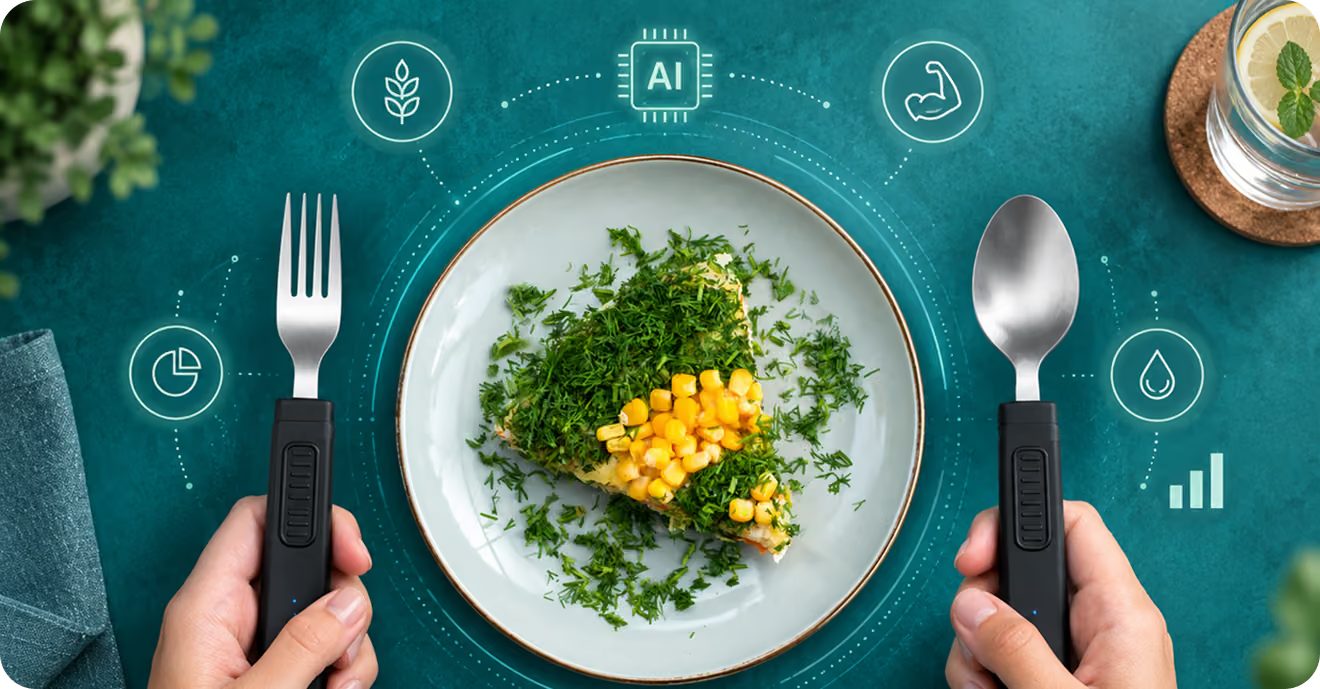
In day-to-day use, BiteQ doesn't change how a meal is eaten, it changes what's known about it afterward. The utensil measures macronutrients, including carbohydrates, the same way at every meal, which means the numbers brought into a care conversation come from a consistent source rather than varying with how carefully any single meal happened to be estimated.
Over time, that consistency is the main practical advantage: a week or a month of measured meals gives a diabetes care team a fuller, steadier picture than an equivalent stretch of manually estimated meals, where accuracy naturally varies day to day depending on time, attention, and familiarity with the food.
None of this changes what a diabetes care team already asks for: glucose monitoring, prescribed medication schedules, and clinical guidance remain the foundation of diabetes management. BiteQ's data is meant to sit alongside that foundation as a more consistent source of dietary information, not in place of any part of it.
For caregivers managing meals on someone else's behalf, the same consistency applies regardless of who is present at the table. The utensil measures the meal the same way whether the person managing the count is the one eating or the one preparing the plate, which keeps the record steady across different routines and different days.
Questions people usually ask
Frequently asked questions about nutrition tracking for diabetes
Is BiteQ a medical device for diabetes management?
Can BiteQ track carbohydrates?
Can I share BiteQ data with my doctor or dietitian?
Does BiteQ replace glucose monitoring?
Can BiteQ replace carb counting for insulin dosing?
Does BiteQ measure blood sugar?
How accurate does carbohydrate measurement need to be for this to help?
Is this appropriate for a child managing diabetes?