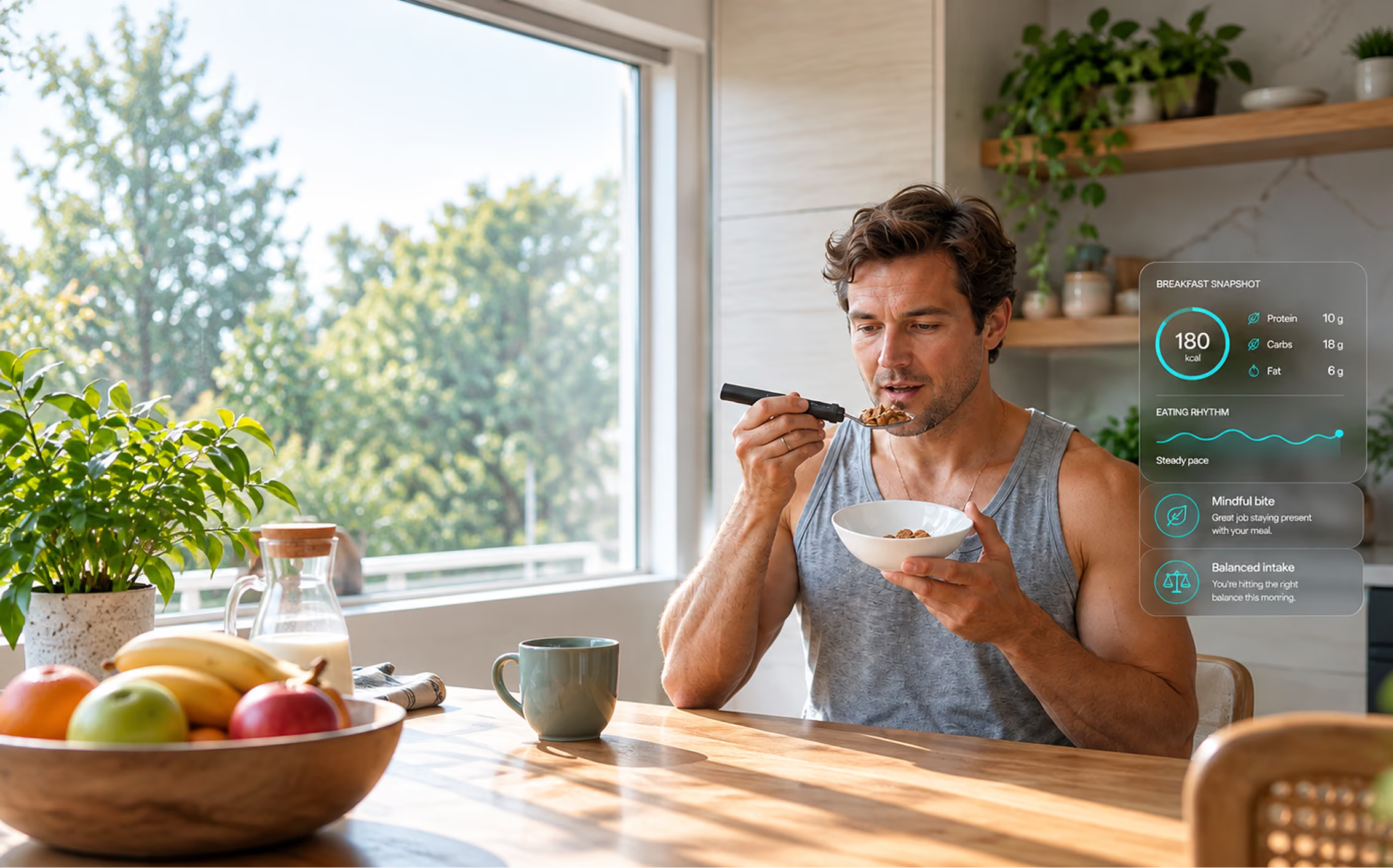
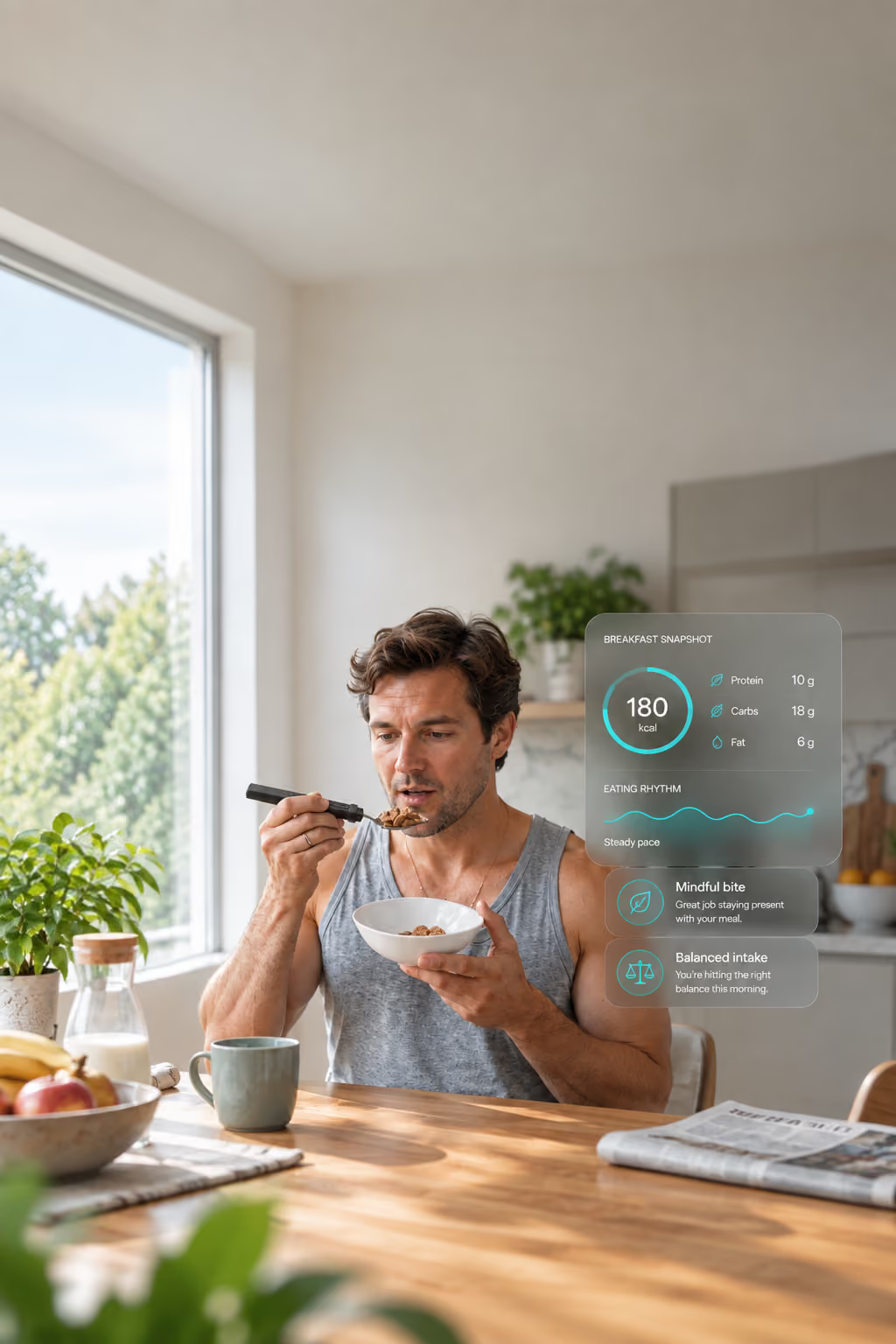
Mindful eating technology that notices pace, not just plates.
Mindful eating is about noticing the meal while it's happening. BiteQ's motion sensor tracks your pace, bite size and meal length as you eat.
Why is mindful eating hard to sustain?
Most approaches to mindful eating rely on a habit you have to build separately from the meal itself: put the fork down between bites, count chews, notice fullness cues, journal how the meal felt afterward. Each of those is a reasonable practice, and each one also asks you to hold a second task in mind while eating, which is precisely the kind of divided attention mindful eating is trying to reduce in the first place.
The friction isn't the idea, it's the execution. Remembering to be mindful during a meal competes with the meal itself for attention, the same way remembering to log a meal does. By the time a habit like that has to compete with a hungry stomach and a plate in front of you, it tends to lose, not because it's not worth doing, but because it's one more thing to hold onto in a moment that's already full.
BiteQ approaches this differently by building the noticing into the utensil rather than into a separate habit. A motion sensor tracks pace, bite size and meal duration automatically, and a discreet vibration can flag the moment your pace runs ahead, while the meal is still happening and there's still time to change course. The awareness doesn't have to be remembered. It's already built into the thing in your hand.
It also holds up in the situations that usually break a mindfulness habit: a stressful day, a meal eaten quickly out of necessity, a distracted dinner in front of a screen. The sensors don't need calm or intention to register pace and bite size accurately, which means the data keeps building even through the exact days a manual mindfulness practice tends to get skipped.
How does mindful eating technology work?
Mindful eating apps usually ask you to pause and reflect. BiteQ builds the noticing into the utensil itself.

Reads pace, not just plates
A tri-axis motion sensor times every hand-to-mouth movement, turning eating speed into something measured instead of assumed.

A nudge, not a lecture
The vibration motor gives a quiet cue in the moment your pace runs ahead, while there's still a meal left to change course on.

Patterns become visible
Pace, bite size and meal duration are surfaced as trends in the app, so a single fast meal becomes a pattern you can actually see.
Who is mindful eating technology for?
This tends to resonate most with people for whom the goal isn't a number, it's a relationship with eating. See how this fits alongside other goals BiteQ is built for individuals to work on.
01
Anyone who's tried a mindfulness practice around eating and found it hard to sustain. Not because the idea was wrong, but because it required a separate ritual on top of an already-full moment.
02
People who eat quickly out of habit, often without noticing until well after the meal is over. And who want a cue that arrives during the meal rather than a realization afterward, when it's too late to change that meal.
03
Anyone working on their relationship with food more broadly. Where the goal is less about a specific number and more about noticing patterns without judgment.
04
Anyone curious whether their eating pace actually varies as much as it feels like it does. Meal to meal, day to day, rather than relying on a vague impression of how they usually eat.
How does a built-in nudge compare to a practiced mindfulness ritual?
Sustaining awareness at a meal
Practiced mindfulness ritual
BiteQ built-in nudge
What it asks of you
Practiced mindfulness ritualRemember and perform a technique each meal
BiteQ built-in nudgeEat with the utensil
Trigger for awareness
Practiced mindfulness ritualYour own recall
BiteQ built-in nudgeSensors detect pace and bite size in the moment
During a stressful week
Practiced mindfulness ritualThe practice lapses; no cue and no data
BiteQ built-in nudgeSensors keep measuring
Scope
Practiced mindfulness ritualBroad; a full attention practice
BiteQ built-in nudgeNarrower; pace and portion
Record left behind
Practiced mindfulness ritualNone unless journaled
BiteQ built-in nudgeContinuous pace and bite-size data
Meditation-style mindful eating practices generally ask for deliberate attention: a set number of chews, a pause between bites, a period of silence before eating. These can be genuinely effective, but they depend on being remembered and practiced consistently, and they're hard to sustain across every meal, every day, especially outside a controlled setting.
BiteQ's approach doesn't ask you to remember a technique. The utensil senses pace and bite size directly and can nudge you in the moment, which means the awareness shows up automatically rather than depending on whether you thought to practice it that day. It's a narrower kind of mindfulness than a full meditation practice, focused specifically on pace and portion, but it's also one that doesn't require a separate ritual to sustain.
The two approaches also differ in what happens when they lapse. Skipping a mindfulness practice for a stressful week means no data and no cue for that week. BiteQ's sensors keep measuring pace and bite size regardless, so a stressful week still produces data worth looking at once things calm down, rather than a gap in the record.
What does a day of mindful eating with BiteQ look like?
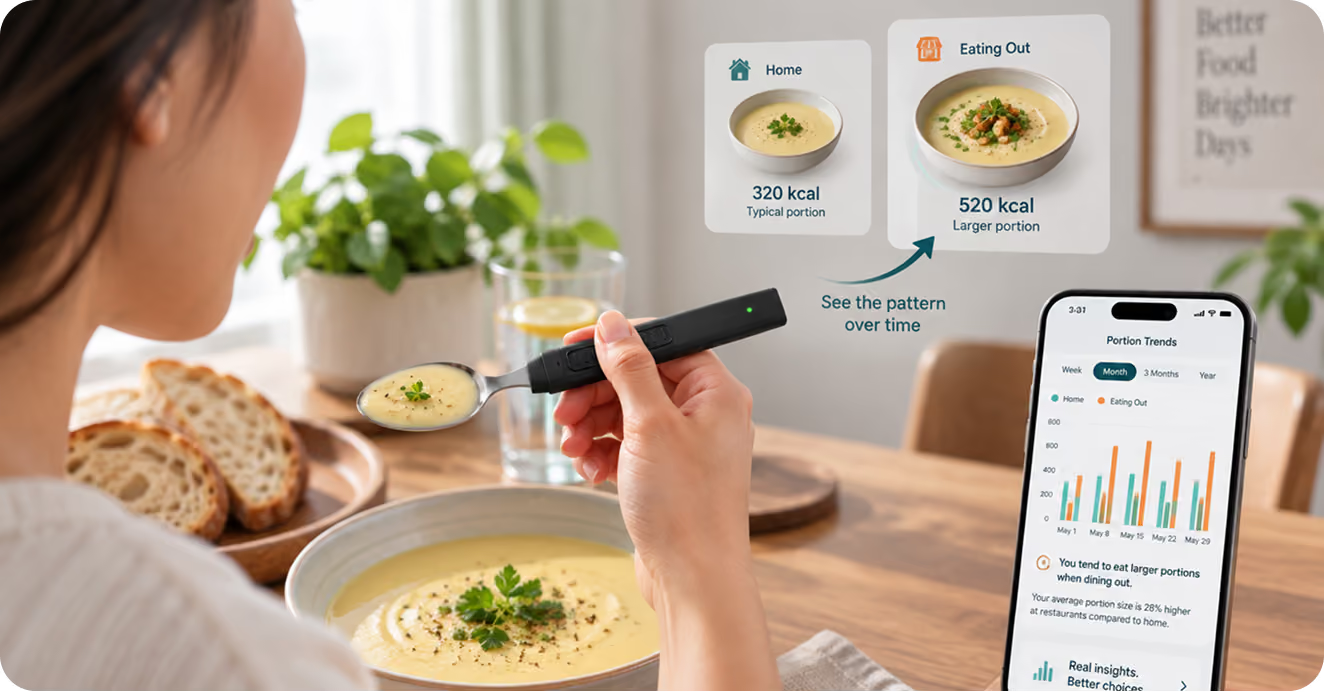
In practice, the mindfulness here doesn't look like a ritual. It looks like eating a meal the way you normally would, with a quiet vibration occasionally letting you know your pace picked up, at which point what to do with that information is entirely up to you.
Over time, the value shifts from the in-meal nudge to the pattern in the app: whether pace consistently rises toward the end of a meal, whether certain times of day or certain settings correlate with faster eating, or whether a particular kind of food changes bite size noticeably. None of that requires remembering anything about individual meals, since the pattern is built from data captured automatically at each one.
This is meant to sit alongside whatever mindful eating practice, if any, someone is already using, not replace it. A guided breathing exercise before a meal and a vibration cue during one are addressing different moments of the same underlying goal.
Some people find the most useful moment isn't the vibration itself but the weekly or monthly review, where a pattern that felt vague, eating faster on weeknights, say, either holds up in the data or turns out to be less consistent than it felt. Either answer is useful, and neither depends on having noticed it in the moment.
Questions people usually ask
Frequently asked questions about mindful eating technology
How does BiteQ support mindful eating?
What triggers the vibration feedback?
Do I need to follow a meditation-style routine for this to work?
Can I see my eating pace trends over time?
Is this the same as a mindfulness meditation app?
Will the vibration feedback interrupt my meal or feel disruptive?
Does mindful eating with BiteQ require me to change how I eat?
Can I turn off the pace feedback if I just want the data?