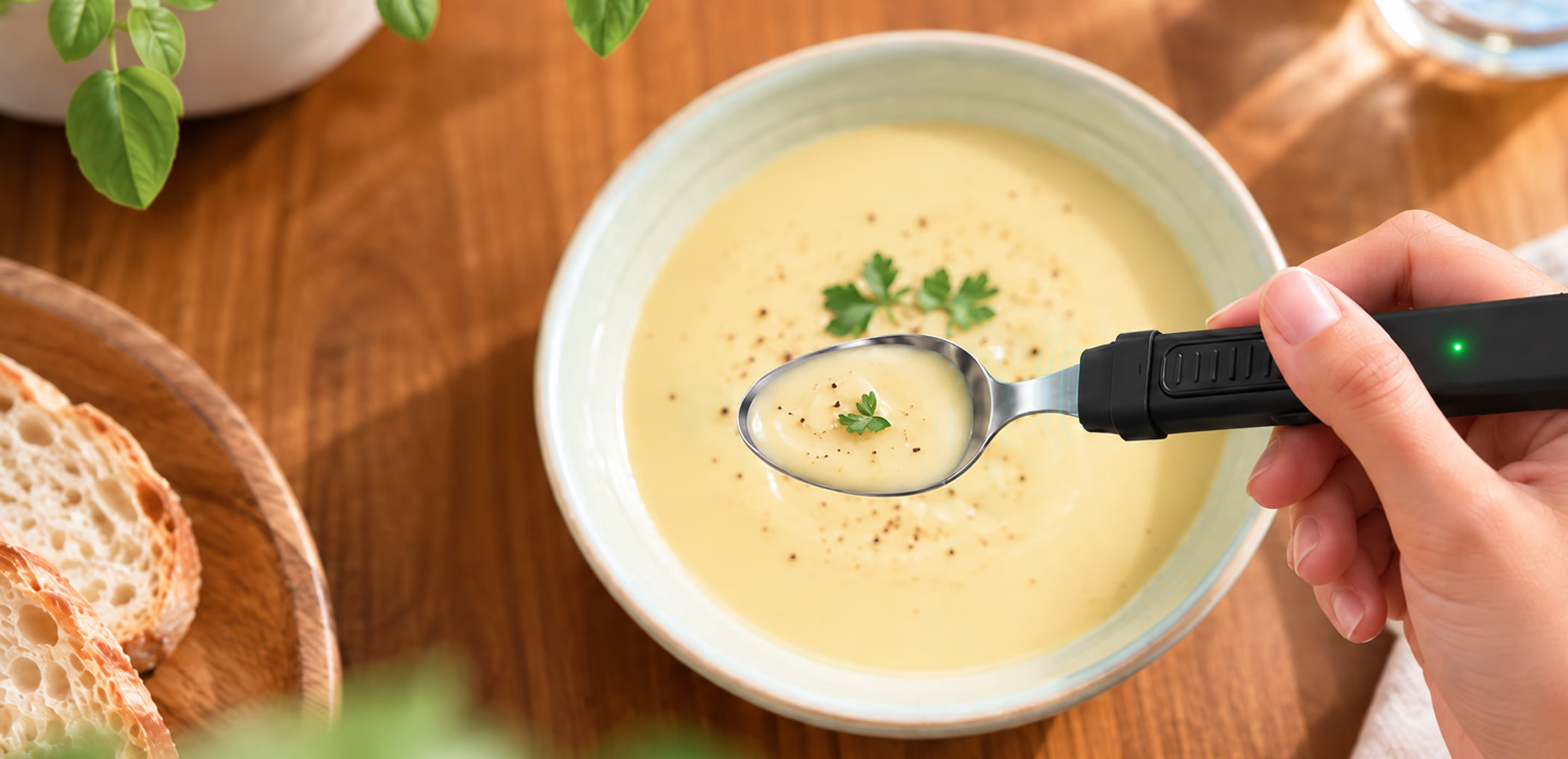
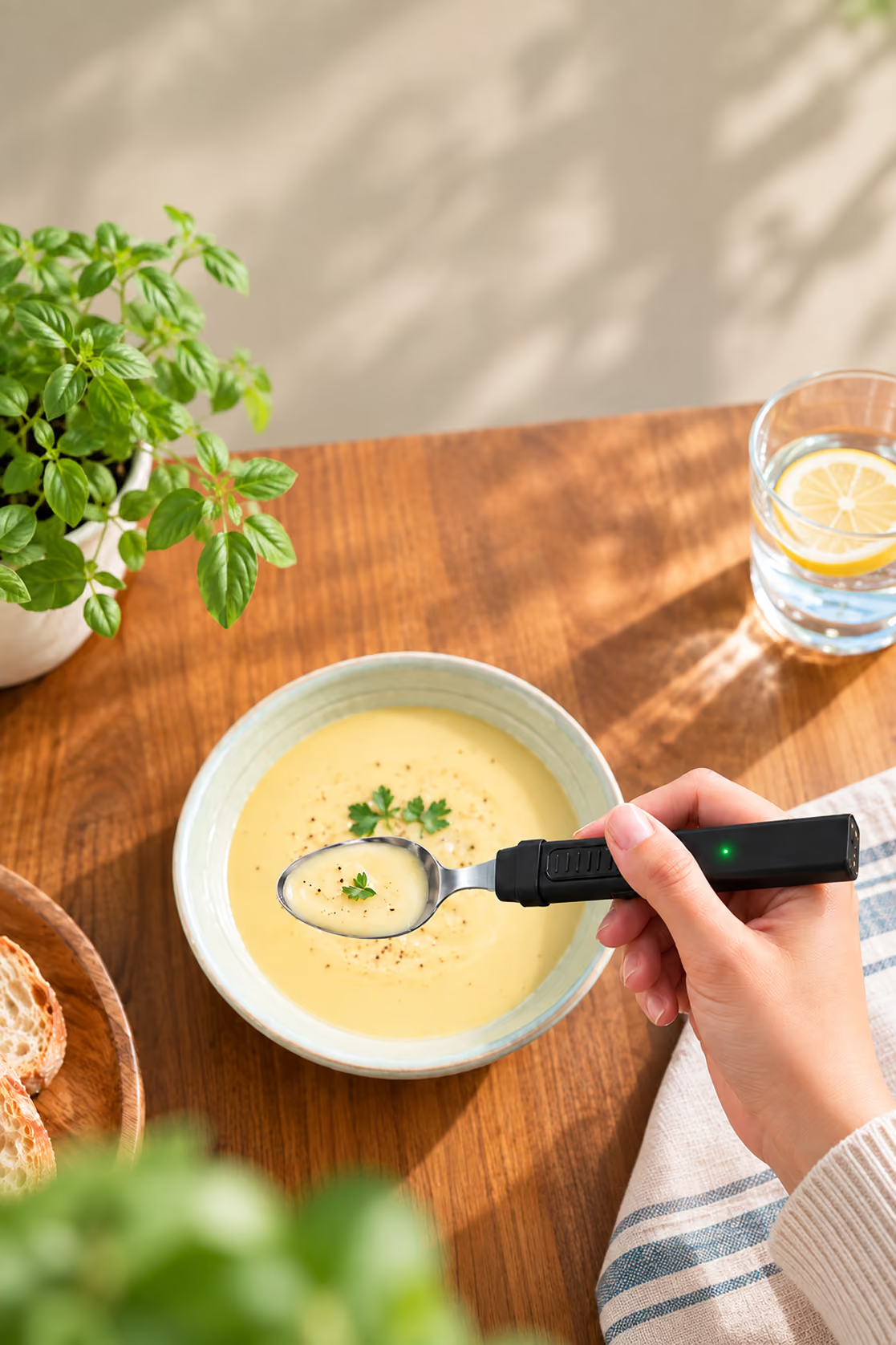
Portion control technology that measures the plate, not your guess.
Portion control usually depends on remembering a serving size or eyeballing a plate. BiteQ's load sensor weighs the food on every bite as it leaves the plate.
Why is serving size different from the amount actually eaten?
Portion control is usually taught as a set of visual heuristics: a serving of protein is about the size of a palm, a cup of rice is roughly a closed fist, a tablespoon of oil is about the size of a thumb tip. These are useful starting points, but they're still estimates, and estimates drift over time, especially as plates get larger, servings get more generous, and the reference point for normal quietly shifts.
The core problem is that almost every portion-control method operates on the served side of the meal: it tells you how much to put on the plate, not how much actually leaves it. Anyone who has clean-plated a serving that was already too large, or picked at the same meal without finishing it, knows those two numbers, served and eaten, aren't the same thing, even though nearly every tracking method treats them as interchangeable.
BiteQ's load sensor measures the second number directly. It weighs the food on each bite as it leaves the plate, so the running total reflects what was actually consumed rather than what was originally served or estimated with a visual heuristic. That distinction, between a plate-side estimate and a bite-by-bite measurement, is the specific gap portion-control technology is built to close.
This also matters most in the situations that are hardest to judge by eye: a plate at a restaurant where the kitchen decides the serving, a shared dish split unevenly at a family meal, or a snack eaten straight from a container with no plate involved at all. In each case, the load sensor measures the same way regardless of how unfamiliar the portion is to estimate visually.
How does BiteQ measure what was actually eaten?
A serving size on a label describes what was plated. It says nothing about what actually got eaten. Here's how BiteQ closes that gap.

A load sensor on every bite
The utensil weighs the food it's carrying at the moment it leaves the plate, on every single bite, not just at the start of the meal.

Portion served versus portion eaten
Nutrition labels and recipes describe what was served. BiteQ measures what actually left the plate, which is what your body received.

No scale, no photo, no memory required
There's nothing to weigh beforehand and nothing to estimate afterward. The measurement happens automatically as you eat.
Who is portion control technology for?
Portion measurement matters most where the gap between served and eaten is largest, or where someone else is setting the portion. See the fuller range of people BiteQ is built for individuals to serve.
01
Anyone who's used portion-size guides, like the palm-and-fist method. And wants that same idea measured directly instead of estimated by eye.
02
People who tend to serve a consistent amount but don't always finish it. Where the gap between served and eaten meaningfully changes the actual intake number.
03
Anyone managing a nutrition plan built around specific portion targets. Who wants to know how closely a real meal matched the plan.
04
People eating out or eating food they didn't prepare themselves. Where portion sizes are set by someone else and harder to judge from experience alone.
How does a kitchen scale compare to a bite-by-bite sensor?
Measuring portions
Kitchen scale
BiteQ load sensor
When it measures
Kitchen scaleOnce, before the meal starts
BiteQ load sensorContinuously, on every bite
What it measures
Kitchen scaleFood as served
BiteQ load sensorFood that actually left the plate
Food left, shared or sent back
Kitchen scaleNot accounted for
BiteQ load sensorExcluded automatically
Shared or family-style dishes
Kitchen scaleCannot divide the portion
BiteQ load sensorMeasures whatever reaches the utensil
Effort per meal
Kitchen scaleWeigh each component beforehand
BiteQ load sensorNone
A kitchen scale is the most accurate manual portion-control method available, and it has a real limitation: it only measures the food before the meal starts. Once food is served, a scale has nothing more to say about what was actually eaten versus what was left on the plate, sent back, or shared.
BiteQ measures on the other side of that gap. The load sensor weighs each bite as it's carried from the plate, continuously through the meal, rather than once at the start. That means the final number reflects the food that actually left the plate, capturing the difference between a serving and a finished meal that a pre-meal scale reading can't see.
The two methods also diverge most clearly with food that doesn't come pre-portioned: a shared bowl of pasta, a family-style side dish, a snack eaten straight from a bag. A kitchen scale has nothing to say about how that shared food gets divided. BiteQ's load sensor measures whatever ends up on the utensil, regardless of how the food was originally portioned or shared.
How do you use portion data over time?
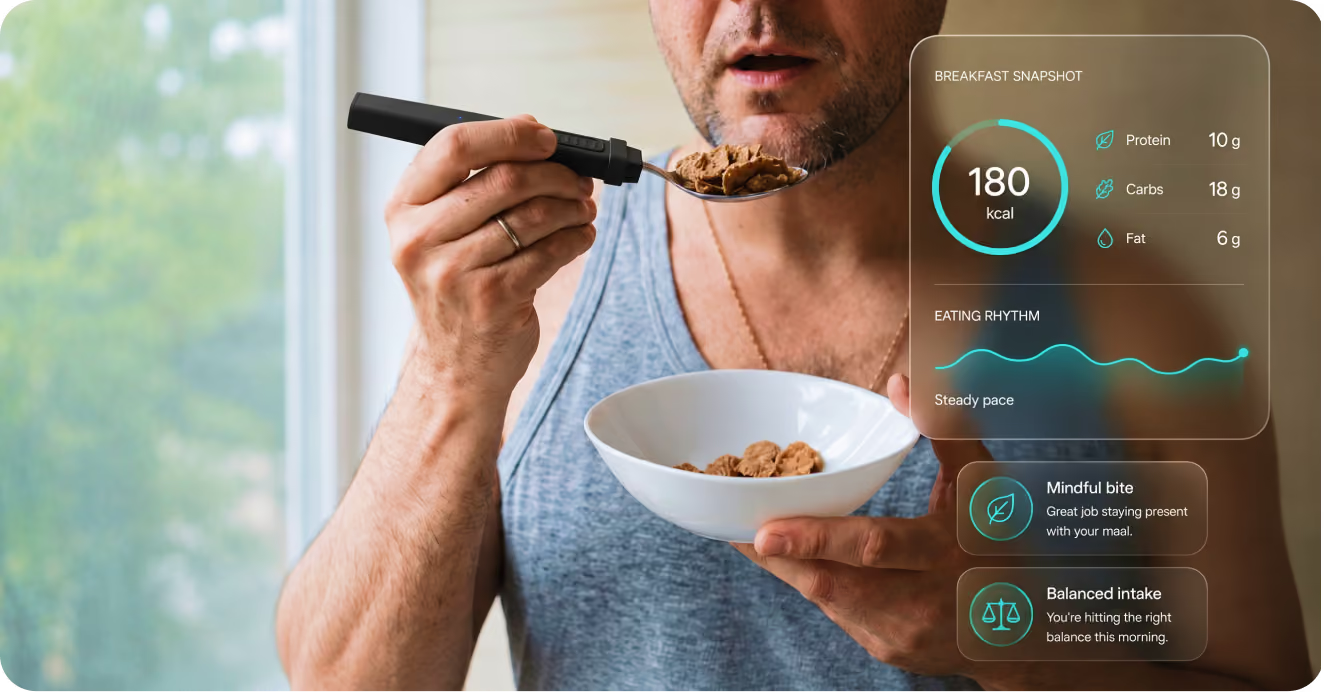
Day to day, portion control with BiteQ doesn't require deciding on a serving size beforehand or comparing a plate to a reference chart. The utensil measures whatever is actually eaten, which means portion awareness comes from the data afterward rather than a decision that has to be made before the first bite.
The more useful signal tends to show up over repeated meals: whether portions of a specific food consistently run larger than intended, or whether a particular setting, like eating out, tends to come with larger portions than eating at home. That kind of pattern is hard to notice from memory alone but straightforward to see once several measured meals are sitting in the same view.
Portion data from BiteQ is a measurement, not a rule. What to do with the information, whether that's adjusting a recipe, a serving spoon, or a habit, is a decision that belongs to the person eating, informed by real numbers instead of a guess.
Over repeated use, portion data also becomes easier to act on than a single measurement ever could be. Seeing that a particular dinner consistently runs larger than intended, across several occasions rather than one, is a much sturdier basis for a decision than a single data point, which is exactly what a bite-by-bite record accumulated over weeks provides.
Questions people usually ask
Frequently asked questions about portion control technology
How does BiteQ measure portion size?
What's the difference between portion served and portion eaten, and why does it matter?
Does portion tracking work with any food?
Do I need to weigh my plate before eating?
Does portion control tracking work if I don't finish my plate?
Can I use BiteQ alongside a specific portion-size plan, like the palm-and-fist method?
Does portion measurement work the same for liquids like soup?
How is bite-by-bite measurement different from weighing my plate before I eat?