

Nutrition monitoring for clinics that replaces recall with a reading.
Clinical nutrition assessment still leans on 24-hour recall. BiteQ gives clinics a measured alternative: nutrients and eating pace captured bite by bite, as a patient eats.
Why is recall-based dietary assessment inaccurate?
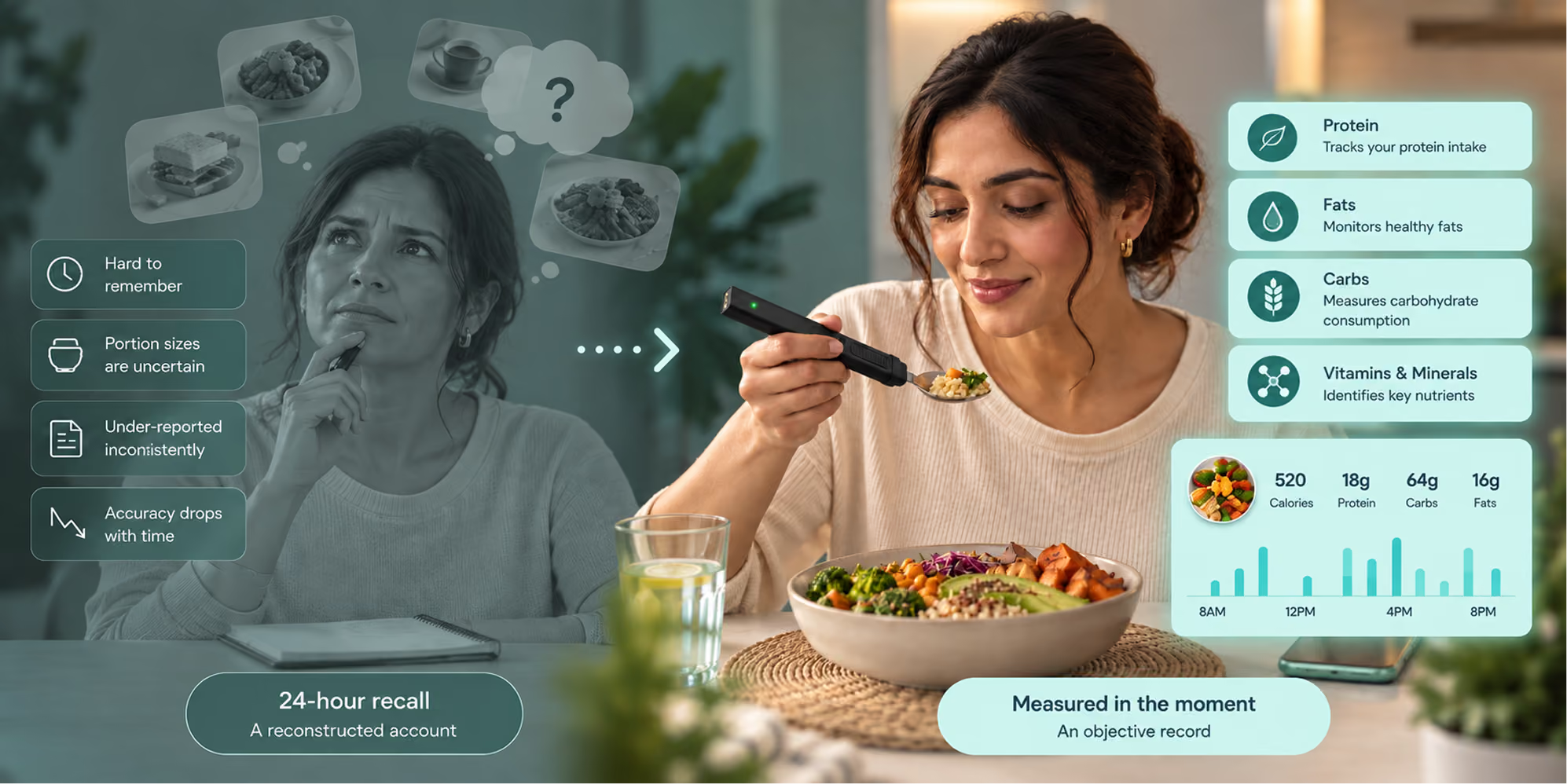
The 24-hour dietary recall, and similar food-frequency and diary-based methods, are standard tools in clinical nutrition because there has historically been no better option: getting an objective read on what a patient actually eats has meant asking them to remember and report it. That approach has a known weakness. Recall accuracy drops with time, portion sizes are hard to estimate after the fact, and patients under-report inconsistently, which is well understood in clinical nutrition practice, not a controversial claim.
BiteQ approaches the same clinical need with a sensor instead of a conversation. A load sensor weighs each bite, an embedded camera identifies the food, and a motion sensor tracks eating pace, so the data behind a clinical assessment comes from the moment of eating, not from a patient's memory of it hours or days later.
This doesn't replace clinical judgment or a dietitian's assessment. It changes the quality of the raw material that assessment is built on, from a reconstructed account to a measured record, generated by the same sensor-and-AI system described on our data & AI page.
BiteQ is a measurement and feedback tool, not a medical device. It supplies measured data to support a clinician's or dietitian's own assessment; it does not diagnose, treat, or replace professional clinical judgment.

What does measured intake data add to clinical assessment?
The same sensors that remove logging friction for an individual user produce the record a clinical team actually needs.

A record, not a recollection
Calories, macronutrients and micronutrients are measured at the bite, giving a clinical team a factual record instead of a patient's best reconstruction of the last day or week.

Behavior data recall can't produce
Eating pace, bite size and meal duration are captured automatically, adding a dimension no interview-based method can reliably surface.

A consistent method across patients and visits
The same sensor measures every patient's intake the same way, removing the variability that comes from how well any individual recalls or reports a meal.
Per bite
Resolution of measurement, versus a once-daily or once-a-visit recall
Macro + micro
Nutrient depth captured automatically, not only a calorie estimate
Continuous
Data available between appointments, not reconstructed at the start of one
Who is this built for?
This is built for the clinical roles where recall-based assessment is the known limiting factor.
01
Registered dietitians running nutrition assessments that currently depend on recall or diary methods. Looking for a measured baseline to build a care plan on instead of a patient's best reconstruction.
02
Clinics managing metabolic conditions such as diabetes, weight-management or GI conditions where dietary intake is core to the treatment plan. Where the accuracy of that intake data materially affects care decisions.
03
Research teams running nutrition studies that currently rely on self-reported food diaries. Where recall bias and inconsistent logging are known limitations of the method.
04
Clinical teams onboarding new patients who need a dietary baseline before a plan can be built. Without waiting weeks for a manually kept diary to produce usable data.
How does 24-hour recall compare to continuous sensor measurement?
What the clinical team gets
24-hour dietary recall
BiteQ continuous measurement
Time span covered
24-hour dietary recallA single reconstructed day
BiteQ continuous measurementEvery meal eaten with the utensil
Source of portion size
24-hour dietary recallEstimated by the patient
BiteQ continuous measurementWeighed by a load sensor
Dependence on memory
24-hour dietary recallFull; meals are recalled after the fact
BiteQ continuous measurementNone; measured as the meal happens
Known failure modes
24-hour dietary recallForgotten meals, merged meals, estimated portions
BiteQ continuous measurementMeals eaten without the utensil
Effort asked of the patient
24-hour dietary recallA recall interview or food diary
BiteQ continuous measurementEat with the utensil
A 24-hour dietary recall captures one day, reconstructed from memory, usually in a single sitting with a clinician or researcher. It's a well-established method precisely because there hasn't been a practical alternative, but its limitations are equally well established: portion sizes are estimated, meals are forgotten or merged together, and the single day captured may not represent a typical one.
BiteQ measures continuously rather than recalling retrospectively. Every meal eaten with the utensil is captured the same way, which means a clinical team can look at a period of measured intake rather than a single reconstructed day, without asking the patient to do anything differently at the table. It's the same measured-data approach we're bringing to clinics, care programs, and employers generally.
Frequently asked questions about clinical nutrition monitoring
Does BiteQ replace a dietitian's assessment?
How does this compare to a 24-hour dietary recall?
Can this be used across a full patient caseload?
Is this validated for clinical use?