
Nutrition care for seniors that doesn't rely on someone remembering to check.
Intake monitoring usually depends on staff noticing what a resident ate. BiteQ measures it automatically instead, the moment the meal happens, with nothing to write down.

Why is intake monitoring hard in senior care settings?
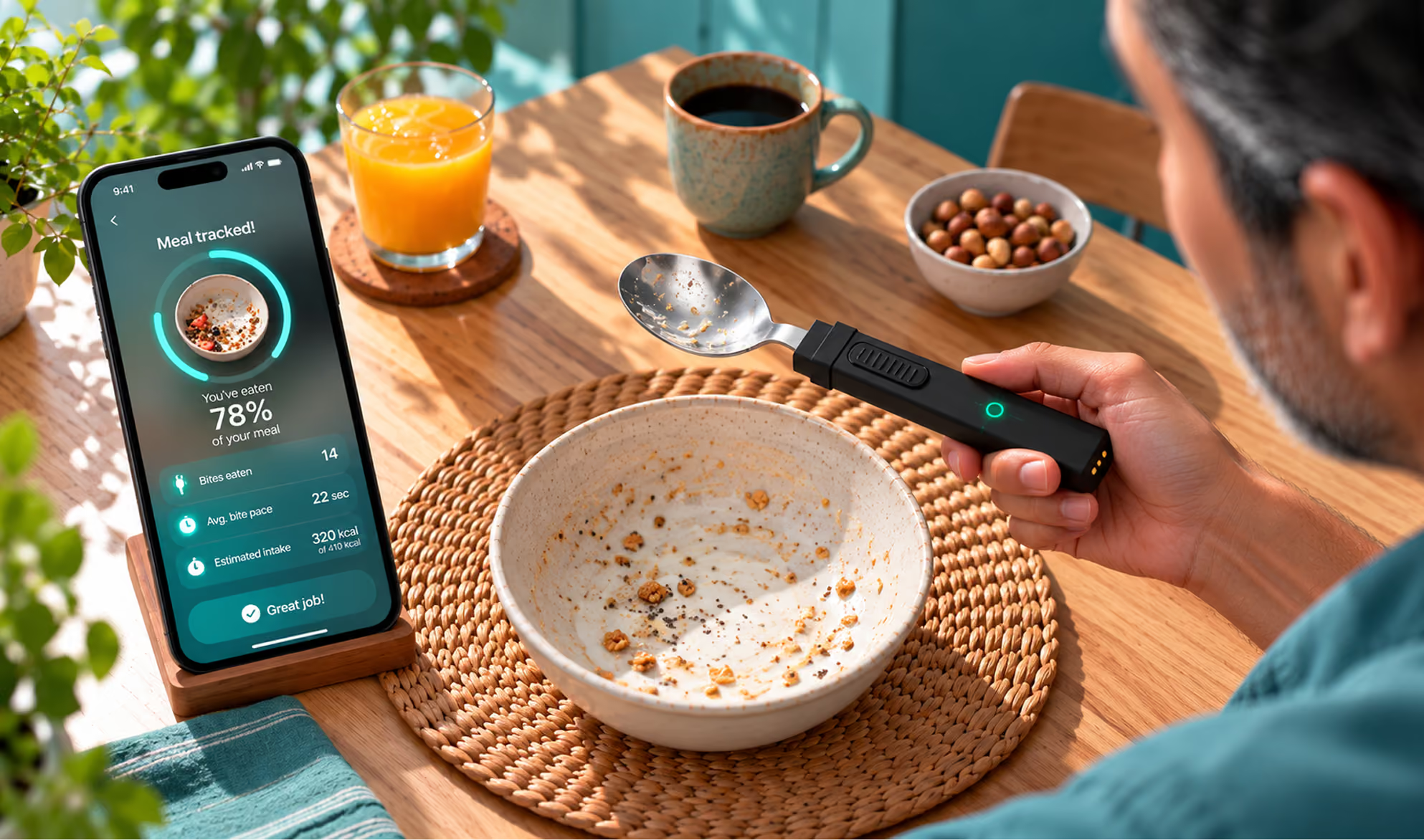
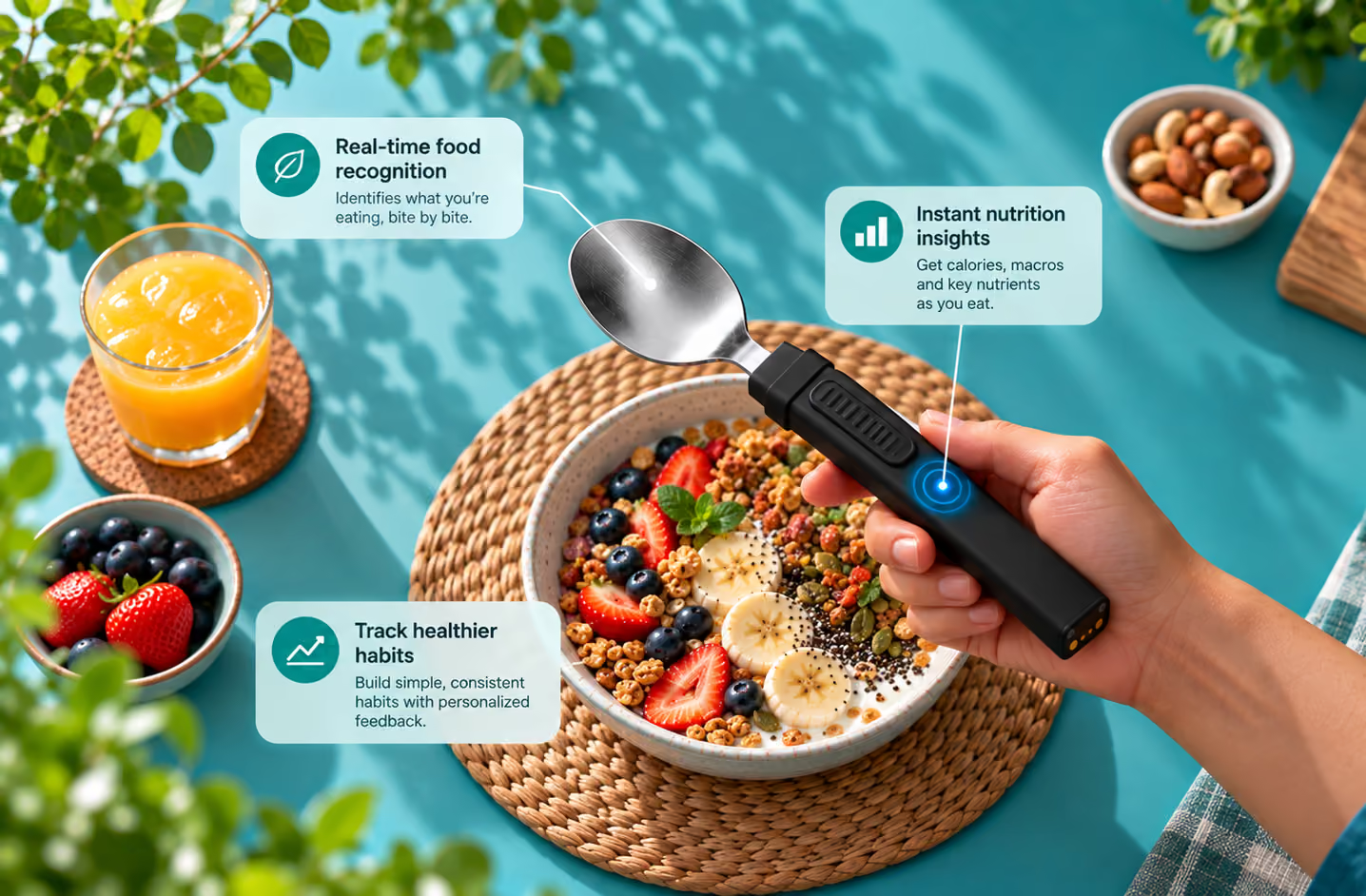
A load cell in the handle weighs each bite, an embedded camera identifies the food, and a motion sensor tracks eating pace, so intake and eating behavior are captured without a staff member having to observe or record anything.
Reduced appetite and inconsistent intake are common, well-recognized concerns in older adults, and catching a meaningful change early usually depends on someone noticing it. In a senior living setting, that means staff observing and often manually recording how much a resident ate at each meal, on top of every other responsibility on their shift. It's a task that's easy to under-prioritize when time is short, not because it isn't valued, but because it competes directly with immediate care needs.
The result is that intake data, when it exists at all, tends to be a rough note rather than a precise, comparable figure, and gaps in observation are common on busy shifts. That's a real limitation for a resident whose nutrition status a family member or care coordinator is trying to track over time.
BiteQ measures intake automatically as a resident eats, the same way it does for any user, using the same sensor-and-AI system described on our data & AI page, which means the data doesn't depend on a staff member being available to observe and record that specific meal. It adds a measured signal to a workflow, rather than a new task competing for the same limited time.
BiteQ is a measurement and feedback tool, not a medical device. It does not diagnose or treat malnutrition or any other condition, and it does not replace the clinical judgment of care staff or a resident's physician.
What does measured intake data add to senior care?
The same automatic measurement that removes logging friction for any user removes an observation task for care staff.

No added task for staff
Intake is measured by the utensil itself, so the data doesn't depend on a staff member being free to observe and record that specific meal.

A precise figure, not a rough note
The load sensor weighs what's actually eaten, giving a comparable number instead of a subjective estimate of how much of a meal was finished.

A trend a family member or coordinator can actually see
Meal-by-meal data accumulates automatically, making a gradual change in intake visible over time rather than dependent on someone noticing it in the moment.
Per meal
Intake measured automatically, not dependent on staff observation that shift
Hand care only
Designed for daily wipe-clean or rinse care in a residential setting, not dishwasher cycles
Zero added task
For care staff already managing a full shift of resident needs
Who is this built for?
This is built for the people responsible for noticing a change in intake before it becomes a bigger concern.
01
Senior living operators wanting objective intake data without adding to staff workload. Where manual observation and recording competes directly with other care responsibilities.
02
Caregivers, whether professional or family, monitoring an older adult's eating at home. Who want a factual record instead of a general impression of how meals are going.
03
Geriatric care coordinators tracking nutrition status across a caseload. Who need comparable, per-resident data rather than inconsistent shift notes.
04
Family members who can't be present for every meal but want visibility into how a loved one is eating. Without relying entirely on secondhand reports from rotating staff.
How does a shift note compare to a measured intake reading?
Tracking intake on a shift
Staff shift note
BiteQ measured reading
How intake is determined
Staff shift noteVisual estimate of the plate
BiteQ measured readingLoad sensor weighs food as it is eaten
Consistency across staff
Staff shift noteVaries with who is on shift
BiteQ measured readingSame method regardless of shift
Recorded when
Staff shift noteIf time allows between other duties
BiteQ measured readingAutomatically, during the meal
Added staff workload
Staff shift noteAn observation and recording task
BiteQ measured readingNone
Eating pace and behavior
Staff shift noteNot captured
BiteQ measured readingCaptured by the motion sensor
The typical way intake gets tracked in a senior care setting is a staff member's note: a rough estimate of how much of a meal was eaten, recorded if there's time between other responsibilities. It's a reasonable practice given the constraints, but it's inherently inconsistent, subjective, and dependent on whoever is on shift that day.
BiteQ replaces the estimate with a measurement. The load sensor weighs the food as it's eaten, so the number reflects an actual reading rather than a staff member's best guess at how much of a plate was finished, and it's captured the same way regardless of who's on shift or how busy the day is. The same sensors also capture eating pace and behavior, a dimension a shift note was never designed to record.
Frequently asked questions about senior nutrition care
Does BiteQ diagnose or treat malnutrition?
Does this add a new task for care staff?
Can family members see the data too?
Is this appropriate for residents with dexterity or mobility limitations?