
Corporate wellness nutrition tracking employees actually stick with.
Wellness nutrition programs lose engagement because manual logging competes with a workday. BiteQ removes that step: the utensil measures each meal as an employee eats.

Why do corporate wellness nutrition programs lose engagement?
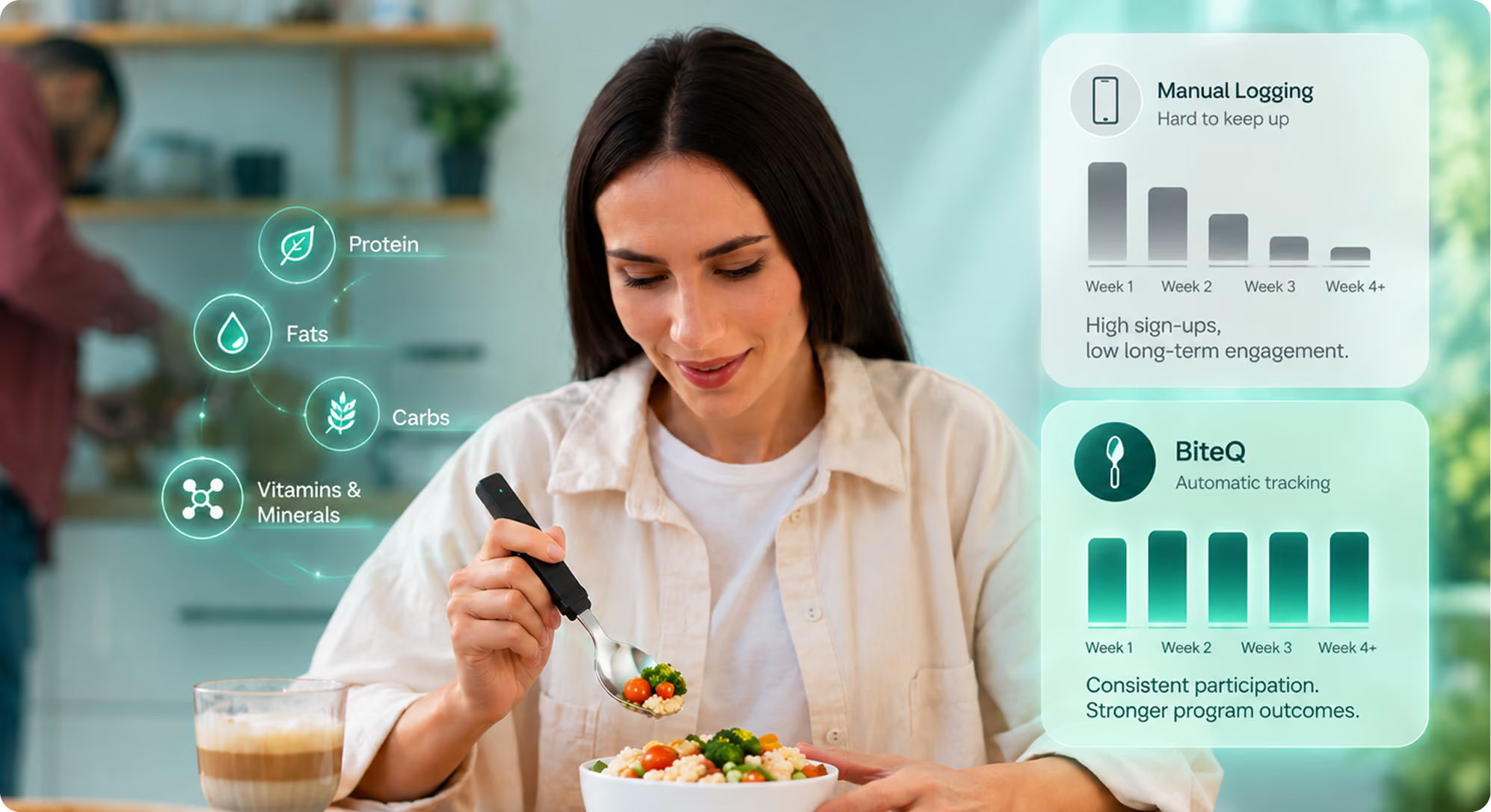
Corporate wellness programs consistently see the same pattern with nutrition tracking components: strong sign-up numbers, an engaged first week or two, then a steady decline in active logging. It's tempting to read that as a motivation problem, but the more consistent explanation is friction. Manual logging asks employees to do a second task, on top of eating, every single day, and that second task is the first thing to slip once a normal week gets busy.
That matters directly for program ROI. A wellness benefit that most employees stop engaging with after a few weeks produces thin data and a hard case to make for renewal. The underlying logic is straightforward, even without a specific percentage attached to it yet: a program that keeps collecting real participation data past the first few weeks has a stronger renewal case than one whose data set thins out right when it needs to demonstrate value.
BiteQ addresses the mechanism directly. Because the utensil measures nutrition and eating behavior automatically, engagement doesn't depend on an employee remembering to open an app after every meal, which is the specific point where most wellness nutrition components lose participation.
BiteQ is a measurement and feedback tool, not a medical device. It supplies measured data to support a clinician's or dietitian's own assessment; it does not diagnose, treat, or replace professional clinical judgment.

What does automatic nutrition tracking change for a wellness program?
The same mechanism that helps an individual user sustain a habit is what keeps a program's engagement numbers intact.

Removes the step that causes drop-off
There's no daily logging task competing with a busy workday, which is the specific point where most wellness nutrition tracking loses participants.

Data that keeps flowing past week one
Because measurement doesn't depend on a remembered habit, participation data stays consistent well past the point manual logging programs typically decline.

A renewal case built on retention
A program that's still collecting real data in month three has a stronger case for renewal than one running on a thin, first-month-only data set; retention is the mechanism, not a marketing number.
3 sensors
Load cell, food-recognition camera, and motion sensor combined in one utensil
Zero logging
Required to keep participation data flowing after the first week
Patent pending
Utensil form factor, designed and built in Dallas, Texas
Who is this built for?
This is built for the teams responsible for a wellness program's engagement numbers, not just its sign-up numbers.
01
HR and benefits leaders evaluating nutrition tracking as part of a wellness benefit. Who need a component that holds engagement past the first few weeks to justify the investment.
02
Wellness program vendors building nutrition tracking into an existing platform. Looking for a data source that doesn't depend on participant logging discipline to stay useful.
03
Employers who've tried app-based nutrition tracking for weight management and seen engagement drop off. And want to understand whether the tracking method, not the incentive structure, was the actual limitation.
04
Programs that need consistent participation data to demonstrate ROI at renewal. Rather than a strong first month followed by a thin, hard-to-defend data set.
How does a logging app compare to a utensil that measures on its own?
What determines program engagement
Logging app
BiteQ utensil
Action required at each meal
Logging appPhotograph, search or type the meal
BiteQ utensilNone; the utensil measures as you eat
What happens when motivation drops
Logging appLogging stops, and so does the data
BiteQ utensilMeasurement continues
Typical engagement curve
Logging appStrong at launch, declines as the habit competes with the workday
BiteQ utensilNot dependent on a daily logging habit
Source of the data
Logging appEmployee self-report
BiteQ utensilSensor reading
Participation data at program level
Logging appGaps whenever logging lapses
BiteQ utensilContinuous while the utensil is used
A typical corporate wellness nutrition component is an app: employees are asked to photograph meals, search a food database, or type in what they ate. Adoption is usually strong at launch, when a new benefit is novel and motivation is high, and then follows a familiar curve down as the daily logging habit competes with an employee's actual workday.
BiteQ's mechanism doesn't depend on that habit holding. The utensil measures the meal automatically, so participation data keeps flowing whether or not an employee remembers to open an app that week. That difference in mechanism is what shows up later as a difference in program-level engagement and, downstream, in the revenue case for the program itself. It's the same automatic measurement approach detailed on our data & AI page.
Frequently asked questions about corporate wellness nutrition tracking
Why do nutrition tracking components in wellness programs usually lose engagement?
Is there data showing this improves program ROI?
Does this require employees to change how they eat?
Can this integrate with an existing wellness platform?