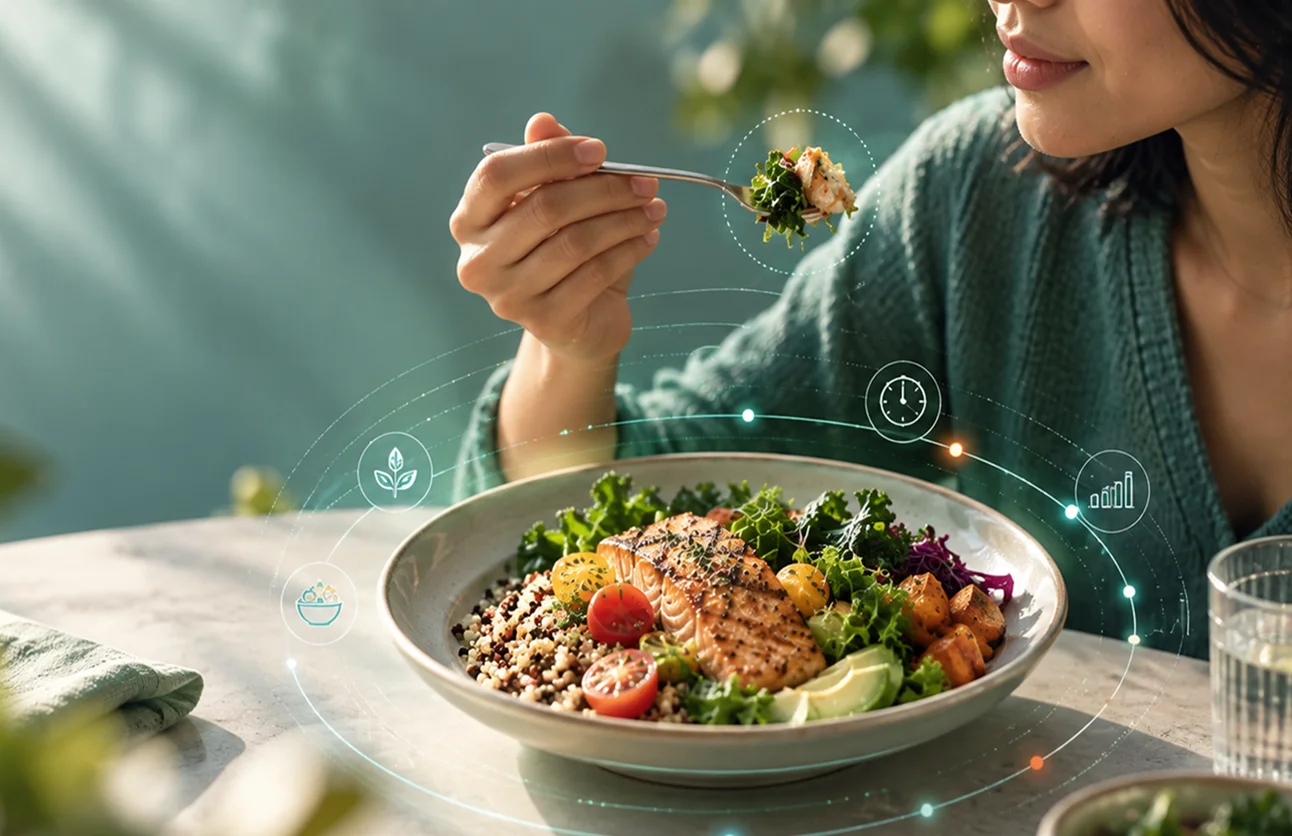
When discussing health, nutrition is often one of the first topics that comes up. Most healthcare professionals agree that what we eat has a significant impact on our well-being, yet accurately understanding daily food intake remains a challenge for most people.
Despite advances in wearable technology, health apps, and digital healthcare platforms, nutrition tracking continues to rely heavily on manual effort. Individuals are often expected to estimate portion sizes, remember ingredients, log meals, and interpret nutritional information themselves.
The reality is that this process is difficult to maintain consistently.
This is not because people lack motivation. It is because collecting accurate nutrition data in everyday life is inherently challenging.
The Gap Between Intent and Reality
Many people want to improve their health. They want to better manage their weight, reduce health risks, improve athletic performance, or simply make more informed dietary choices.
However, the information available to support those decisions is often incomplete.
Most individuals can easily track steps, heart rate, sleep duration, and physical activity. Modern devices have made these measurements accessible and convenient.
Food intake remains different.
Unlike steps or heart rate, nutrition data is rarely captured automatically. It depends largely on self-reporting, which introduces inaccuracies and inconsistency.
As a result, individuals may believe they are making informed decisions while relying on incomplete information.
Why Nutrition Data Matters
Nutrition affects nearly every aspect of human health.
Research continues to demonstrate connections between dietary habits and conditions such as obesity, type 2 diabetes, cardiovascular disease, hypertension, and other chronic illnesses.
Healthcare providers routinely advise patients to improve nutritional habits. Yet obtaining objective and consistent dietary data remains difficult.
Without accurate information, it becomes harder to identify patterns, measure progress, and personalize recommendations.
This challenge exists not only for individuals but also for clinicians, dietitians, researchers, and healthcare organizations.
Understanding Eating Behaviors
Food choices are only one part of nutrition.
How people eat is equally important.
Meal timing, eating speed, portion size, frequency of meals, and consistency of dietary habits all contribute to overall health outcomes.
These behaviors often develop gradually over time and may go unnoticed.
Many individuals are surprised when they review their own eating patterns objectively. What feels like occasional behavior can sometimes represent a consistent habit.
Awareness is often the first step toward meaningful change.
The Role of Technology
Technology cannot replace personal responsibility, medical advice, or healthy decision-making.
What it can do is provide better information.
Historically, technological innovation in healthcare has focused on improving measurement and visibility. Blood pressure monitors, glucose monitors, fitness trackers, and wearable devices have all contributed to a greater understanding of human health.
Nutrition remains one of the least digitized aspects of daily wellness.
This presents an opportunity to develop tools that reduce friction, improve accuracy, and help individuals better understand their own behaviors.
The goal should not be to overwhelm people with more data. The goal should be to make meaningful information easier to access and easier to understand.
Building for Long-Term Health
One of the most important lessons we have learned is that health is rarely transformed by a single decision.
Long-term outcomes are usually the result of thousands of small decisions made consistently over time.
Technology should support those decisions without becoming a burden itself.
Any solution designed to improve nutrition must recognize the realities of daily life. People are busy. They have families, careers, responsibilities, and competing priorities. Systems that require constant effort often struggle to achieve long-term adoption.
Simplicity matters.
Consistency matters.
Practicality matters.
Looking Forward
The future of nutrition will likely be shaped by better data, improved personalization, and a deeper understanding of human behavior.
As technology evolves, there is an opportunity to move beyond estimates and assumptions toward more objective insights about how people eat and how those habits influence health.
This is not simply a technology challenge.
It is a healthcare challenge.
It is a behavioral challenge.
And ultimately, it is a human challenge.
Our responsibility as innovators is not to tell people how to live. It is to help them better understand themselves so they can make informed decisions about their own health.
That objective remains at the center of everything we do at Spoonified.