Every startup name has a story behind it, and we at "Spoonified" are no exception. The goal is to have that name reflect the values and mission into a carefully choses syllables. Past weekend, I has the pleasure of the joining Amber Owens, at the launch of her new book Eat for Energy (check it out guys!), where I had the opprotunity to talk about what we do at Spoonified. A woman came up to me following the talk and asked me “What inspired you to name you company Spoonified?”.
A question that I have never been asked before. Never.
Back in 2022 as I brainstormed ways to capture the spirit of convenience, comfort, and innovation - in a utensil, I kept returning to the humble spoon—a symbol of simplicity, accessibility, and unity across cultures. The journey to choosing "Spoonified" as our name is more than this though. It reflects not just what we make, but the why we make it.
Our inspiration is the Spoon Theory.
Spoon Theory is a metaphor created by Christine Miserandino. It explains the daily energy limitations faced by people with chronic illnesses or disabilities. Each “spoon” represents a unit of energy. While most people start their day with an unlimited supply, those with chronic conditions have a finite number of spoons. Every activity—from getting dressed to socializing—costs a spoon. When spoons run out, so does the energy to function. The theory helps others empathize with the invisible challenges many face, fostering understanding and compassion. Spoon Theory has since become a powerful symbol of self-advocacy and community among those living with chronic conditions.
Let me decipher this further.
- A person has roughly the same amount of energy each day.
- Each unit of energy is represented by a spoon.
- Healthy people have more spoons (energy) than those with an illness that causes chronic fatigue.
- Some activities cost more spoons than others.
- A person with a fatiguing chronic illness needs to make decisions about which activities to spend their limited number of spoons (energy) on -- the illness stops them doing many things they want to do.
- The chronic illness means that if the person does too much in the morning, they will not have enough spoons left for the afternoon or evening.
- The chronic illness may mean that a person can do something in the morning OR on the afternoon - but NOT both. They may seem inconsistent because their energy levels and number of spoons fluctuate.
- A healthy person does not need to plan how to spend their spoons, because they do not have an illness that limits them
Our daily eating habits play a crucial role in fueling our bodies and maintaining consistent energy levels. When we choose balanced, nutritious foods and pay attention to how we eat, we set ourselves up for better physical and mental performance. And mindful eating habits — can make a significant difference. By slowing down, managing our portions effectively, and appreciating the eating experience, we not only nourish our bodies more effectively but also help prevent overeating and energy crashes.
Let's break it down:
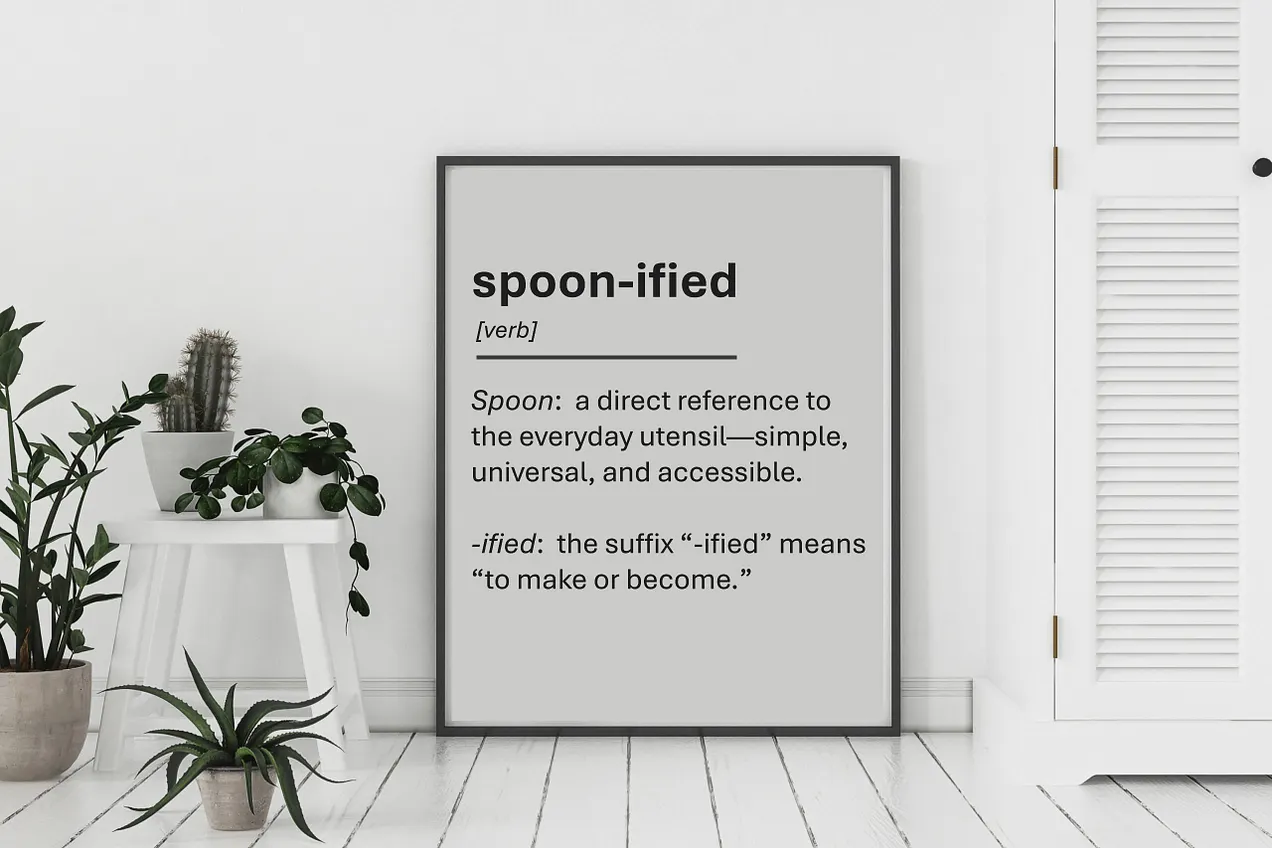
- Spoon: At its core, “spoon” a direct reference to the everyday utensil—simple, universal, and accessible.
- -ified: The suffix “-ified” means “to make or become.” By adding this to “spoon,” we create a word that means “to be energized and ready for the day, one spoon at a time.”
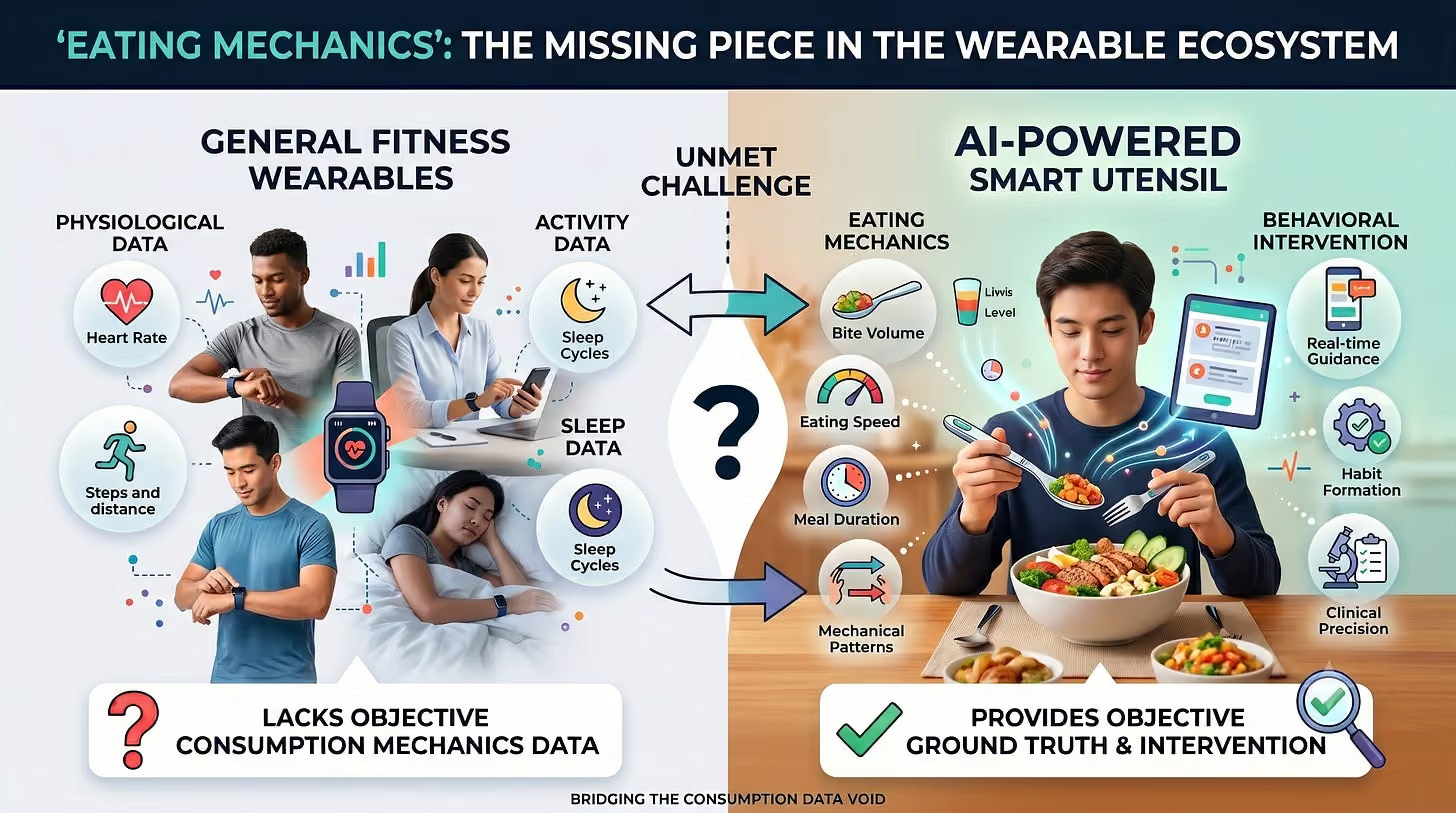
Spoonified perfectly captures our mission: to cultivate sustainable mindful eating habits to live a healtheir life — especially those who count their “spoons”—in leading vibrant, empowered lives.