From Garmin's photo-based calorie counter to Amazfit's plate-watching camera, CES 2026 made one thing undeniably clear: passive, automated nutrition tracking is no longer science fiction. Here is what it means for how we eat.
For the better part of a decade, the promise of effortless nutrition tracking sat just out of reach. Apps got faster, barcodes got smarter, and AI photo recognition got eerily accurate — yet the fundamental friction remained: you still had to stop, remember, and log. CES 2026 showed that this era is ending.

The Big Shift: From Logging to Sensing
The headline from this year’s show floor was not a single device — it was a convergent signal across multiple brands that nutrition tracking is becoming a passive sensory act rather than an active logging ritual.
Garmin introduced a new feature inside Garmin Connect+ that lets users photograph meals and receive near-instant AI analysis covering calories and macronutrients — no app-switching required. Amazfit went further, debuting the V1tal prototype: a pocket-sized camera positioned beside your plate that tracks not only what you are eating, but the order in which you consume it, how fast you eat, and whether you reached for carbs or protein first. Its AI then folds that data into training load and recovery metrics inside the Zepp app.

The Gap That Remains
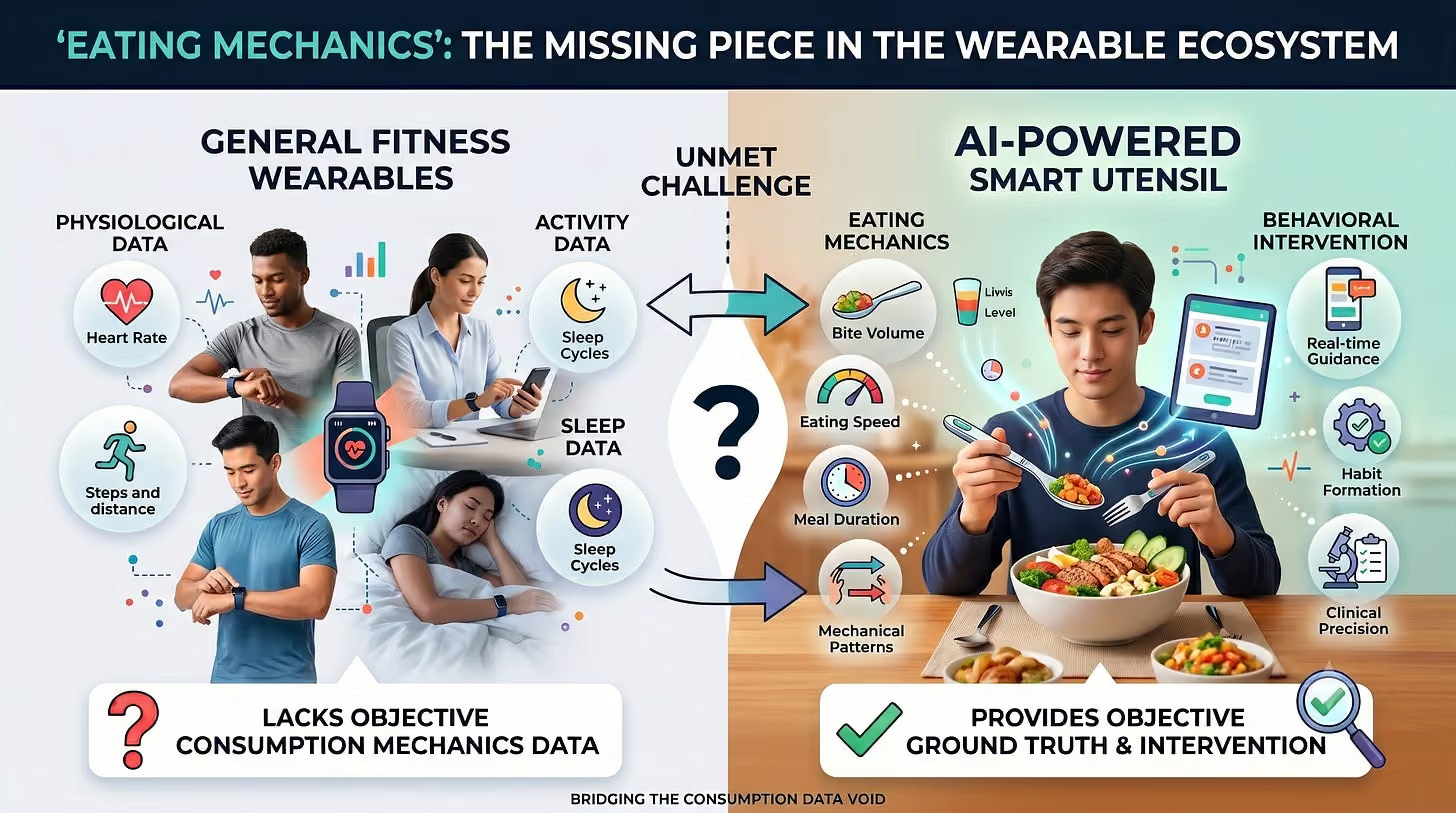
Here is the uncomfortable truth that CES 2026 could not solve: every camera, every smart ring, and every AI photo-scan app still relies on the food being visible before consumption. They watch the plate. They cannot measure the bite.
This is precisely the measurement gap that intelligent utensil technology addresses. While cameras estimate portion sizes from a bird’s-eye view, sensor-embedded utensils capture the actual quantity consumed, spoonful by spoonful, with no estimation required.

What This Means for the Intelligent Utensil Category
The CES 2026 wave validates the direction without completing the journey. Camera-based plate scanning solves for food identity. Spoon-level sensing solves for food quantity, eating speed, and behavioral pattern — the three variables that research links most directly to sustainable health outcomes.
Three Signals Worth Watching Through 2026
- Software over hardware gravity. Multiple exhibitors noted a shift toward prioritizing the app and AI experience, not just new hardware form factors. Smart utensils that pair with rich behavioral analytics are well-positioned.
- Behavioral tracking, not just nutrient tracking. Amazfit’s V1tal explicitly monitors eating behavior: pace, sequence, pattern. This mirrors Spoonified’s dual focus on nutrition beyond behavior.
- Healthcare business interest. Nutrition platforms deployed through clinics report patient retention improvements and revenue increases of up to 28%, signaling that institutional buyers are ready for hardware-backed, accurate nutrition data.